 Quality Services,
When an Indianapolis commercial building owner starts comparing roofing proposals, the conversation almost always lands on TPO roofing at some point. It is the most widely installed single-ply membrane on new commercial flat roofs in Indiana, and for good reason. But what those proposals should say before anyone gets on the roof matters as much as the membrane itself.
At CVC Roofing, we install TPO systems on commercial and industrial buildings across Indianapolis, IN, and we put every material and warranty term in writing upfront. Call us at (317) 557-0888 to get a proposal that tells you exactly what you are buying.
This article covers what a complete TPO roofing specification should contain for an Indianapolis commercial building, what happens when key details are left out of a proposal, and what building owners should confirm before committing to any TPO installation contract.
TPO Roofing: What the Specification Should Say?
A TPO roofing specification is not a description of what the contractor plans to do. It is a binding document that defines exactly what materials will be installed, how they will be attached, and what warranty protection the building owner receives when the work is complete. In Indianapolis, where summer heat pushes rooftop temperatures past 150 degrees and spring storm systems regularly test seam integrity, the details in that specification determine how the roof performs for the next 20-plus years. A proposal that describes the work in general terms gives the contractor latitude to make cost-driven decisions after the contract is signed. A proposal that names the membrane manufacturer, specifies the mil thickness, defines the attachment method, names the insulation product and R-value, and states the warranty tier in advance leaves no room for substitution once the crew arrives.
Membrane Brand and Thickness of TPO Roofing
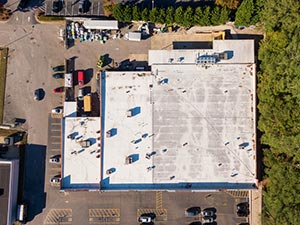
Not all TPO membranes are manufactured to the same standard, and not all thicknesses perform equally under Indianapolis conditions. A 45-mil membrane carries a lower upfront material cost than a 60-mil membrane, but on a commercial building with rooftop HVAC equipment requiring regular service access, a 45-mil product is more vulnerable to puncture and surface wear. Indiana’s summer UV intensity accelerates surface oxidation on thinner membranes faster than on thicker ones. The manufacturer matters too. Established brands like Carlisle, Versico, and GAF manufacture TPO to consistent internal standards and stand behind their warranties through long-term service infrastructure. A generic or off-brand TPO product at a similar price point may not carry the same quality control or warranty backing that a named manufacturer provides. Both the brand and the thickness belong in the proposal before the contract is signed.
Attachment Method and Wind Uplift
Indianapolis sits in a region where severe thunderstorm systems produce significant wind events, and the attachment method for a TPO roofing system directly determines how the assembly performs under that wind load. Mechanically fastened systems use screws and stress plates through the membrane and insulation into the deck, providing strong resistance in the field but creating thermal bridging through the fasteners that reduces effective insulation R-value. Fully adhered systems bond the membrane to the insulation across its entire surface, eliminating fastener bridging and providing excellent wind uplift resistance, though they require more precise surface preparation. The attachment method should be selected based on the building’s wind zone, the deck substrate type, and the insulation assembly, not on which method is faster for the installer. A proposal that does not name the attachment method is a proposal that has not made that decision yet.
What the TPO Roofing Warranty Should Cover
The warranty terms on a TPO roofing installation are only as strong as the language behind them. Before any contract is signed, confirm the following about the warranty being offered:
- Whether the warranty covers both materials and labor or materials only. A labor exclusion means repair costs come out of the building owner’s pocket even when the material failed.
- Whether there is a dollar cap on covered repairs, which can be exhausted by a single significant repair event well before the warranty term expires.
- Whether the contractor is certified by the membrane manufacturer to issue that warranty tier. Uncertified installers cannot offer manufacturer-backed warranties regardless of what the proposal states.
Get a Complete TPO Roofing Specification
Indianapolis commercial building owners who want to know exactly what is going on their roof and exactly what warranty protects it after installation deserve a TPO roofing proposal that answers both questions before the contract is signed. At CVC Roofing, every proposal names the materials, defines the scope, and states the warranty terms upfront. Call us at (317) 557-0888 to get a proposal that gives you a real answer.
FAQ
How long does a TPO roofing installation typically take on a mid-size Indianapolis commercial building?
Most mid-size commercial TPO installations complete within three to five days depending on roof complexity, number of penetrations, and weather conditions.
Can TPO roofing be installed over an existing flat roof in Indianapolis?
A TPO roof is possible over a dry, well-adhered existing membrane when Indiana code permits, and the deck can handle the additional load.
Is white TPO always the best color choice for Indianapolis commercial buildings?
White is the most common choice for its Energy Star reflectance performance during Indiana summers, though gray and tan options are available when aesthetics or building codes require a different finish.
What deck types are compatible with TPO roofing installation in Indianapolis?
TPO can be installed over steel deck, concrete deck, and wood deck substrates using the appropriate attachment method and insulation assembly for each surface type.