 Quality Services,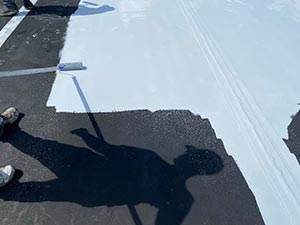
Flat roof waterproofing helps commercial property owners protect their buildings from water intrusion while supporting long-term roof performance. In Anderson, IN, where commercial roofs are exposed to rain, snow, and changing weather conditions, effective waterproofing depends on every part of the roofing system working together to keep moisture out.
CVC Roofing & Sheet Metal offers flat roof waterproofing services in Anderson, IN. Call (317) 557-0888 to discuss roofing solutions tailored to your building’s needs and long-term performance goals.
Professional flat roof waterproofing can help prevent leaks, extend roof service life, and provide dependable protection for your commercial property for years to come.
What Makes a Flat Roof Waterproof
A flat roof stays watertight when four components perform together: the membrane, the seams, the flashing, and the drainage system. The membrane is the primary waterproof barrier that covers the roof surface. Seams connect sections of membrane together, flashing seals transitions around walls and rooftop equipment, and drainage moves water off the roof before it can create prolonged stress.
Different flat roof systems create waterproof seams in different ways. Thermoplastic membranes such as TPO and PVC use heat-welded seams that fuse adjacent sheets into a continuous connection. EPDM rubber membranes typically rely on adhesives or seam tapes to join sections together.
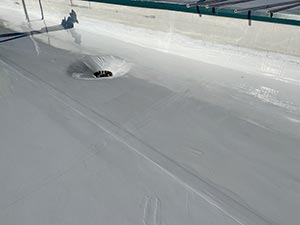
Drainage is equally important. Even the best membrane will experience more stress if water remains on the roof for extended periods. Properly sized drains, scuppers, and slope design help move water away from seams and flashing areas where leaks most often begin.
How Indiana’s Climate Tests Flat Roof Waterproofing
Anderson’s weather creates several challenges for commercial roofs. Spring brings frequent rain events that test drainage capacity and seam integrity. Late-summer storms can introduce wind-driven water that reaches flashing details and roof penetrations.
Winter adds another layer of stress through freeze-thaw cycles. Water that enters a small gap can freeze, expand, and gradually enlarge the opening. Repeated freezing and thawing places movement stress on seams, flashing edges, and attachment points throughout the roof system.
Summer heat and ultraviolet exposure also contribute to aging. Over time, UV radiation can dry out sealants, affect surface coatings, and increase thermal movement across the roof.
Where Waterproofing Usually Breaks Down
Most flat roof leaks do not originate in the middle of a large open roof area. They usually begin at seams, flashing transitions, penetrations, or drainage points. These locations experience the most movement and exposure, making them the first areas where small defects can develop.
Common warning signs include standing water that remains for more than 48 hours after rain, visible seam separation, cracked flashing sealant, blistering on the membrane surface, and interior water stains. Soft or spongy areas underfoot may indicate moisture trapped beneath the membrane.
Restoring or Maintaining Flat Roof Waterproofing
When waterproofing issues are caught early, localized seam repairs or flashing repairs may be enough to restore performance. Heat-welded membranes can often be re-welded in affected areas, while adhesive-based systems may be repaired with new seam tape or bonding material.
Coating systems become a practical option when the existing membrane remains structurally sound but is showing signs of surface aging. A properly prepared coating can renew waterproofing performance and extend roof life without a full replacement.
Flat Roof Waterproofing
Flat roof waterproofing depends on the membrane, seams, flashing, and drainage system working together to provide dependable long-term protection. Understanding how these components function as a complete waterproofing system helps property owners make informed decisions about repairs, maintenance, and roof replacement.
CVC Roofing & Sheet Metal offers flat roof waterproofing services in Anderson, IN. Call (317) 557-0888 to discuss roofing solutions tailored to your building’s needs and long-term performance goals.
Professional flat roof waterproofing can help prevent leaks, extend roof service life, and provide dependable protection for your commercial property for years to come.
FAQ
How do I know if my flat roof’s waterproofing has failed?
Signs include interior water stains or drips after rain, blistering or bubbling on the membrane surface, standing water that does not drain within 48 hours, visible seam separation, flashing gaps, and soft areas in the roof deck that may indicate trapped moisture. Some failures are only detectable through infrared or moisture scanning.
Can a flat roof be waterproofed without full replacement?
Yes, in many cases a coating system can restore waterproofing performance if the existing membrane is still intact and the roof structure remains dry and stable. If the membrane is severely deteriorated or the insulation is saturated, replacement may be the more effective long-term solution.
What is the most water-resistant flat roofing system for a commercial building?
There is no single best answer for every building. TPO provides heat-welded seams, EPDM offers long-term flexibility with properly adhered laps, and silicone coatings perform well in areas with ponding water. Installation quality, drainage design, and ongoing maintenance often have a greater impact on waterproofing performance than the membrane type alone.