 Quality Services,
Low slope roofing is the most common roof design for commercial buildings throughout Anderson. Building owners planning a repair, restoration, or replacement often have several roofing systems to choose from, each offering different strengths depending on the property’s needs. Low slope roofing includes several membrane systems designed specifically for roofs with minimal pitch, helping commercial buildings achieve dependable waterproofing and long-term performance.
For related commercial roofing guidance in Anderson, see single-ply roofing in Anderson and commercial roof inspection in Anderson.
Call CVC Roofing & Sheet Metal at (317) 557-0888 for low slope roofing in Anderson, IN.
What Defines Low Slope Roofing?
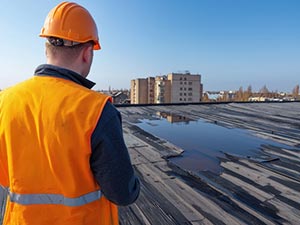
Although many people refer to commercial roofs as “flat roofs,” nearly all commercial roofs have a slight slope that directs water toward drains, gutters, or scuppers. Roofs with pitches below approximately 2:12 are generally classified as low slope, requiring roofing materials specifically engineered for slower drainage and continuous weather exposure.
Unlike steep-slope roofing systems commonly found on homes, low slope roofing depends on continuous waterproof membranes rather than overlapping individual shingles or panels. These membranes create a sealed surface that protects the building while accommodating rooftop equipment, HVAC units, skylights, and numerous penetrations commonly found on commercial properties.
Because these roofs remain exposed to standing moisture for longer periods after rainfall, installation quality, seam construction, flashing, and drainage all play significant roles in long-term performance.
Comparing Low Slope Roofing Systems
Several roofing systems dominate today’s commercial low slope market, each with characteristics suited to different building requirements.
TPO is a thermoplastic membrane that uses heat-welded seams to create continuous waterproof joints. Its reflective surface may help reduce cooling costs during warmer months, making it a popular choice for many commercial buildings.
EPDM is a synthetic rubber membrane known for flexibility and long-term durability. Membrane sections are joined using specially designed seam tapes or adhesives. EPDM has a long history of dependable performance across many commercial applications and remains a trusted option for large roof areas.
PVC also uses heat-welded seams but offers additional resistance to chemicals, grease, and certain industrial contaminants. This makes it well suited for restaurants, food processing facilities, and manufacturing operations where rooftop exposure differs from standard commercial environments.
Modified bitumen combines asphalt with reinforcing materials to create multiple protective layers. It has been used successfully for decades and remains an option for many commercial buildings requiring durable waterproofing.
Roof coatings represent another solution when an existing membrane remains structurally sound. Rather than replacing the entire roof, a coating may restore weather protection and extend service life while reducing replacement costs.
How Indiana’s Climate Influences Low Slope Roofing
Anderson experiences seasonal weather that places varying demands on commercial roofing systems throughout the year. Spring rains require dependable drainage to prevent prolonged ponding water, while summer sunlight exposes roofing membranes to ongoing ultraviolet radiation.
Winter introduces repeated freeze-thaw cycles that cause roofing materials to expand and contract. Over time, these temperature changes place stress on seams, flashing, and other roof transitions. Proper installation and routine maintenance help roofing systems accommodate these seasonal movements while maintaining waterproof performance.
Restoration or Replacement, Choosing the Right Path
When a low slope roof begins showing signs of age, building owners often must decide whether repair, restoration, or replacement offers the greatest value. The answer depends on membrane condition, insulation performance, moisture infiltration, and the overall age of the roof.
Roofs with isolated seam damage or localized flashing concerns are frequently good candidates for targeted repairs. If the membrane remains structurally sound, restoration using an approved coating system may extend service life without requiring complete replacement.
However, widespread membrane deterioration, saturated insulation, or significant deck damage often makes replacement the more practical long-term investment. A professional inspection, including moisture detection when appropriate, provides valuable information before choosing the most cost-effective solution.
Anderson Low Slope Roofing Specialists
Selecting a low slope roofing system involves balancing installation methods, expected lifespan, maintenance requirements, and building use. Understanding how TPO, EPDM, PVC, modified bitumen, and restoration coatings differ allows property owners to make informed decisions that fit both operational needs and long-term budgets.
For low slope roofing in Anderson, IN contact CVC Roofing & Sheet Metal at (317) 557-0888 today.
FAQ
What is the difference between a flat roof and a low slope roof?
Although “flat roof” is a common term, most commercial roofs include a slight slope to help move water toward drains. Roofs with pitches below about 2:12 are considered low slope and require membrane systems specifically designed for these drainage conditions.
Which low slope roofing system lasts the longest?
Longevity depends on installation quality, maintenance, climate, and building conditions rather than the membrane alone. Well-installed TPO, EPDM, PVC, and modified bitumen systems can all provide decades of dependable performance when properly maintained.
Can a low slope roof be repaired rather than replaced when it starts leaking?
Yes, if damage is limited to isolated seams, flashing, or small membrane areas. When moisture has spread into insulation or the roof has extensive deterioration, replacement often provides greater long-term value.