 Quality Services,
Commercial roof maintenance helps property owners manage drainage issues, membrane wear, flashing concerns, and developing leaks before they become harder to address. In Indianapolis, IN, CVC Roofing provides professional commercial roof maintenance for commercial buildings. A useful maintenance program turns inspection findings into scheduled actions, records what was completed, and makes it clear when a contractor needs to return.
Business owners in Indianapolis can call (317) 557-0888 to discuss roofing concerns and plan appropriate follow-up. For a closer look at what a professional evaluation can cover, see CVC Roofing’s commercial roof inspection in Indianapolis.
A Practical Maintenance Schedule: What to Check and When
An inspection report is most useful when each finding is assigned a timing, responsibility, and follow-up trigger. The table below separates safe owner observations from contractor roof-surface work.
| When | What to Check | Who Handles It | Priority |
|---|---|---|---|
| Spring, after winter | Interior stains or drips, visible exterior drainage problems, and storm debris around the building | Owner: interior and ground-level observations with photos. Contractor: roof-surface drainage, edge, seam, and flashing inspection | Routine unless active leakage is present |
| After significant wind or storms | New ceiling stains, active drips, displaced exterior materials, or other signs of damage | Owner: document visible changes. Contractor: inspect the roof surface and affected details | High when conditions changed suddenly |
| Summer | Seam, flashing, membrane, penetration, and traffic-area condition | Contractor task | Routine or near-term based on findings |
| Fall, before winter | Drainage readiness, vulnerable seams or flashing, and previously monitored areas | Owner: review prior records and note interior or ground-level changes. Contractor: drainage and roof-surface maintenance | Routine unless a developing defect needs repair |
Owners can safely document interior and ground-level signs such as ceiling stains, active dripping, unusual discharge around downspouts, or debris that may have come from the roof. Walking the roof, probing seams, checking flashing up close, clearing rooftop drains, or evaluating membrane damage should be left to a roofing contractor.
Turn Findings Into Priorities and Follow-Up Triggers
Not every finding needs the same response. An active leak, storm opening, or rapidly worsening condition may justify immediate contractor attention. A seam or flashing concern that is not leaking may be scheduled as near-term work. Minor wear that is stable can be documented and monitored at the next planned visit. The goal is to make the maintenance plan usable rather than treat every observation as an emergency.
Keep a simple log showing the inspection date, photos, location of each finding, priority, recommended action, completion date, and next follow-up. This creates a roof history that makes recurring issues easier to recognize and helps future contractors understand what has already been done.
Warranty requirements should be tracked separately. Some roofing warranties include specific inspection, reporting, repair, or maintenance obligations, but those requirements vary by manufacturer and system. Compare the maintenance calendar with the actual warranty documents for the building instead of assuming one schedule applies to every roof.
What Commercial Roof Maintenance Includes
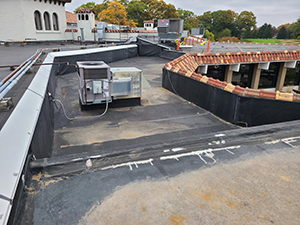
Commercial roof maintenance can include debris and drainage review, seam and flashing evaluation, membrane checks, attention to penetrations and edges, and repairs identified during inspection. The exact scope depends on the roof system and current condition. Maintenance does not guarantee that a roof will never leak, but it gives owners a structured way to find developing problems and respond before they become more disruptive.
If an inspection identifies damage that has moved beyond routine maintenance, the next step may be a defined commercial roof repair in Indianapolis. Keeping maintenance and repair scopes separate also makes budgeting and documentation clearer.
Benefits of Ongoing Roof Maintenance
Planned maintenance can make roofing costs easier to manage because owners have more time to evaluate recommendations before a leak or storm damage forces an urgent decision. It also creates better records for comparing recurring problems, completed repairs, and future capital needs.
A roof that receives timely attention may remain serviceable longer than one that is ignored until visible failure occurs, but actual service life depends on the system, installation, weather exposure, drainage, traffic, and existing condition. Maintenance should support informed planning rather than be treated as a promise that replacement can always be delayed.
Commercial Roof Maintenance Services
Commercial roof maintenance involves more than repeating the same checklist at every visit. It requires an understanding of low-slope systems, drainage behavior, membrane condition, and the building’s repair history. CVC Roofing also provides broader commercial roofing services in Indianapolis, allowing owners to coordinate maintenance findings with inspection, repair, and longer-term planning when needed.
CVC Roofing serves commercial properties in Indianapolis, IN. Call (317) 557-0888 to discuss a maintenance schedule based on the roof’s current condition and documented findings.
Frequently Asked Questions
Why is commercial roof maintenance important?
It helps owners document roof condition, identify developing issues, schedule repairs by priority, and plan future work with better information. It cannot guarantee against every leak or storm-related problem.
What does commercial roof maintenance usually include?
It can include drainage review, debris removal, seam and flashing evaluation, membrane checks, and follow-up repairs based on the roof system and current condition.
Can regular maintenance delay roof replacement?
It can help a serviceable roof avoid preventable deterioration, but replacement timing still depends on the roof’s condition, moisture, system performance, and repair history.
How should I track maintenance visits?
Record dates, photos, locations, findings, priorities, completed actions, and next follow-up dates. Keep the log with the roof warranty documents so any system-specific maintenance requirements can be checked directly.