 Quality Services,
Commercial roofs in Anderson face changing weather throughout the year, from freezing winter temperatures to heavy spring rain, summer heat, and fall storms. Each season places different demands on a roofing system, making routine inspections and timely maintenance essential for protecting commercial properties. Commercial roofers help building owners prepare for these seasonal changes while reducing the risk of costly disruptions caused by roof damage.
Call CVC Roofing & Sheet Metal at (317) 557-0888 for commercial roofers in Anderson, IN.
Commercial Roofers Prepare Roofs for Weather Conditions
Winter is often the most demanding season for commercial roofing systems in central Indiana. Repeated freeze-thaw cycles allow moisture to enter small openings before expanding as temperatures drop. This movement can gradually separate seams, loosen flashings, and widen existing defects if they are not repaired early.
Commercial roofers typically inspect drainage systems, roof penetrations, and membrane seams before winter arrives. Clearing debris from drains and verifying that water can move freely across the roof helps reduce the chance of ponding water freezing during colder months.
Buildings with older roofing systems benefit from additional attention because aging materials are generally less flexible and more susceptible to seasonal movement.
Spring Storms Can Reveal Hidden Roof Problems
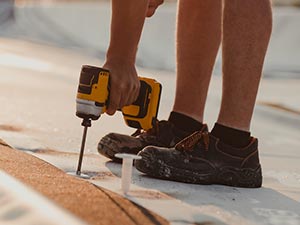
Spring often brings heavy rain, hail, and strong winds to Anderson. Even when roof damage is not visible from the ground, storms may create punctures, lifted flashing, clogged drains, or membrane separation that allows moisture to enter the roofing system.
A professional post-storm inspection helps identify these issues before they develop into interior leaks. Early repairs often remain relatively straightforward, while unnoticed storm damage can continue expanding with each rainfall.
Seasonal inspections also provide valuable documentation that may assist building owners if insurance claims become necessary after significant weather events.
Summer Heat and UV Exposure Affect Roof Performance
Although summer offers favorable conditions for planned roofing projects, prolonged heat and ultraviolet exposure gradually affect roofing materials. Daily expansion and contraction caused by temperature changes place repeated stress on seams, flashing details, and rooftop penetrations.
Commercial roofers frequently recommend scheduling non-emergency repairs, coating applications, or preventive maintenance during warmer months because weather conditions are generally more predictable. Completing planned work before colder weather returns helps prepare the roof for another winter season.
Routine inspections during summer can also identify minor issues that developed earlier in the year before they become larger maintenance concerns.
Fall Maintenance Helps Prevent Winter Emergencies
Fall provides an excellent opportunity to prepare commercial roofs for the challenges of winter. Leaves, branches, and seasonal debris can collect around roof drains and gutters, slowing water drainage during heavy rain or melting snow.
Commercial roofers inspect drainage systems, flashing details, seams, rooftop equipment, and visible membrane conditions before freezing temperatures arrive. Addressing worn sealants, loose flashing, or drainage problems during the fall often reduces the likelihood of emergency repairs during winter.
A planned maintenance schedule built around seasonal weather patterns helps building owners protect roofing investments while minimizing interruptions to daily business operations.
Trusted Anderson Commercial Roofers
Commercial roofing performs best when maintenance follows the changing seasons rather than waiting until leaks appear. Regular inspections after winter, following major storms, during summer maintenance periods, and before winter arrives help identify developing issues before they become significant repairs.
For commercial roofers in Anderson, IN, contact CVC Roofing & Sheet Metal at (317) 557-0888 today.
FAQ
When is the best time of year to schedule commercial roofing work in Indiana?
Late spring through early fall usually provides the most favorable conditions for planned installations and major repairs. Fall is an excellent time for maintenance before winter weather arrives, while emergency repairs can be completed whenever necessary.
How does Indiana’s winter affect commercial flat roofs?
Freeze-thaw cycles allow trapped moisture to expand and contract repeatedly, which can separate seams, loosen flashing, and increase the risk of leaks. Blocked drains and ice accumulation may also contribute to ponding water.
Should I have my commercial roof inspected after a major storm?
Yes. Wind, hail, and heavy rain can damage roofing materials even when no interior leaks are immediately visible. A prompt inspection helps identify hidden damage before it develops into larger structural problems.