
 Quality Services,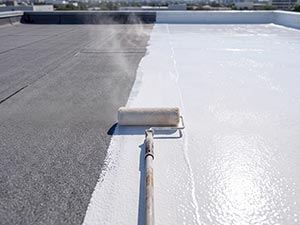
Indianapolis receives roughly 42 inches of rain a year, and much of the city’s warehouse, distribution, and institutional space sits under a large flat roof. The membrane in the open field of the roof is a continuous surface with relatively few potential failure points. Flat roof sealing matters because leaks almost never start there; they typically begin where the membrane meets another surface.
Call CVC Roofing & Sheet Metal at (317) 557-0888 for flat roof sealing in Indianapolis, IN.
Flat Roof Sealing Waterproofs the Weak Points
Flat roof sealing is the work of closing the joints where a membrane meets another surface. It helps protect vulnerable roof elements such as lap seams, flashings, pipe penetrations, equipment curbs, parapet walls, and drain collars.
Those joints carry stress the open membrane never sees. Materials that expand and contract at different rates place repeated stress on the same connection, while the building settles and shifts underneath them.
This is why sealing concentrates at transitions instead of spreading across the roof. The open field of the membrane generally experiences less stress, while the areas surrounding penetrations and transitions handle greater movement.
Every Transition Is a Different Job
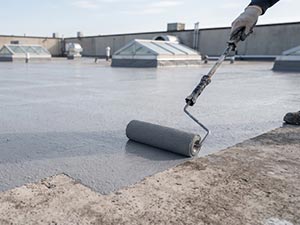
No single sealant handles every transition, which is why material selection is part of the repair rather than an afterthought.
A pipe penetration needs a boot that grips the pipe and a sealant that stays flexible while the pipe moves with temperature, since a rigid material can crack as the pipe expands and contracts. A parapet flashing has to shed water down and away while resisting wind-driven rain that can push beneath the edge, so termination bar placement matters as much as the sealant.
Lap seams need a product compatible with the membrane chemistry underneath. A sealant that is incompatible with the existing system may look properly installed at first but can lose adhesion over time.
Indiana Weather Makes Flat Roof Sealing Necessary
Central Indiana experiences numerous freeze-thaw cycles between December and March, and each one widens any gap that is already holding water.
Spring rainfall then puts these joints to the test. A gap that was difficult to detect during winter can become an active leak during periods of heavy spring rainfall.
Summer adds ultraviolet exposure. Sealant exposed to direct sunlight can harden and shrink, while the same product tucked under metal flashing lasts considerably longer.
How to Spot Flat Roof Sealing Failure
Failed sealant often shows visible signs on the roof before a leak appears inside the building. Look for a visible gap between the sealant and the surface it bonded to, or a bead that has shrunk, cracked, or pulled back from the substrate.
Lifted flashing at a curb, a loose termination bar along a parapet, and a drain collar with a gap you can slide a fingernail into are the same signal in different forms.
Interior signs can also point to specific roof transitions. A stain along an exterior wall line usually traces to perimeter flashing, while a stain near a rooftop unit points to the curb above it.
Flat Roof Sealing Protects Indianapolis Buildings
A seam that opens during a spring storm can lead to damaged inventory, damaged ceilings, or moisture behind a wall that develops into a much larger problem over time. Keeping these transitions properly sealed can help prevent these problems with minimal disruption to building operations.
Flat roof sealing is targeted work on an existing roof, and our veteran-owned team can complete this work with minimal disruption to the operations below. For flat roof sealing in Indianapolis, IN, contact CVC Roofing & Sheet Metal at today.(317) 557-0888
FAQ
Why do flat roofs leak at the edges instead of the middle?
The open membrane generally has fewer potential failure points. Edges, curbs, and penetrations join two different surfaces and carry far more movement stress, making these areas more susceptible to gaps and leaks.
How long does flat roof sealant last before it needs reapplying?
Many commercial sealants at transition points can last 5 to 10 years, though freeze-thaw cycling and direct sunlight can shorten service life at exposed joints.
Can flat roof sealing be done while the building stays open?
Yes. Sealing individual penetrations, flashings, and seams is targeted work that does not require occupants to leave or operations to pause.