 Quality Services,
A commercial roof coating in Lafayette, IN can be a practical restoration option when the existing roof is still a sound base for the coating system. CVC Roofing & Sheet Metal provides commercial roof coating and restoration services, but coating should follow an evaluation of moisture, adhesion, substrate condition, drainage, compatibility, and needed repairs rather than being treated as an automatic alternative to replacement.
Coating can protect a suitable existing roof and improve surface reflectivity, but it does not correct saturated insulation, rotten decking, widespread membrane failure, or drainage defects by itself. Call 317-557-0888 to discuss whether an existing commercial roof is a restoration candidate.
Is Your Roof a Restoration Candidate?
The table below shows how common conditions affect the coating decision. It is a planning framework, not a diagnosis. Final suitability depends on the roof system, project documents, concealed conditions, preparation requirements, and the selected coating.
| Condition | When Coating May Fit | When Repair or Replacement Comes First |
|---|---|---|
| Moisture | Available evidence supports a dry, serviceable assembly or a limited condition that can be corrected before coating | Saturated insulation, broader concealed moisture, or uncertain moisture extent could undermine the restoration |
| Adhesion | The prepared surface is compatible with the specified primer and coating and meets the project’s adhesion requirements | The surface is unstable, contaminated, delaminated, or cannot meet the specified adhesion criteria |
| Substrate condition | Deck, membrane, seams, flashings, and surrounding materials remain suitable for restoration after defined repairs | Rotten or damaged decking, widespread failure, or unstable materials require corrective work or a broader replacement scope |
| Drainage | Water reaches drains, scuppers, or edges as intended after any needed maintenance or corrective work | Persistent ponding is caused by unresolved slope, drain, deck, or other drainage conditions that coating will not correct |
| Compatibility | The selected coating system is compatible with the existing roof and required preparation | The existing surface or prior materials are incompatible with the proposed system or cannot be prepared to meet its requirements |
Coating does not fix ponding-water drainage defects, rotten decking, or saturated insulation. A sound, compatible single-ply membrane may be a restoration candidate after the required preparation and repairs. When the existing assembly is too deteriorated or moisture-damaged to support restoration, flat roof replacement in Lafayette is a separate scope to evaluate.
The CVC Roofing Approach to Roof Coating
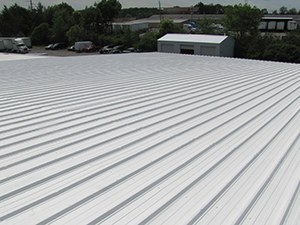
Before recommending coating, the roof should be evaluated for existing materials, visible defects, drainage, moisture concerns, and the repairs needed before application. The final process depends on the selected coating system and project specification, but a useful restoration scope should address four stages.
- Assessment: Document the existing roof system, visible defects, drainage conditions, previous repairs, and any moisture concerns that could change the scope. When additional moisture investigation is needed, the method should fit the roof assembly and decision being made.
- Preparation: Clean and prepare the surface to the coating system’s requirements. Remove or correct loose, failed, contaminated, or incompatible material, and use primer where the specified system requires it.
- Repairs: Complete compatible repairs at seams, flashings, penetrations, punctures, and other defects before coating. Coating should not be used to conceal unresolved damage.
- Application and acceptance: Apply the coating to the specified coverage or thickness and review the completed work against the written scope. Acceptance criteria should come from the project specification and selected system rather than one universal field test.
After completion, the owner should retain the project records and follow the inspection and maintenance requirements that apply to the installed system. A later commercial roof inspection in Lafayette can document changing conditions, but no single follow-up visit guarantees long-term performance.
Silicone and Acrylic Roof Coatings
CVC Roofing & Sheet Metal’s current commercial coating scope includes silicone and acrylic coating and restoration work. The right choice depends on the existing roof, drainage, preparation, compatibility, exposure, and the selected product.
Silicone coatings are commonly selected for UV and moisture resistance, while acrylic coatings are commonly selected for reflectivity and use on roofs that drain appropriately. Those are general coating characteristics, not a rule that one material is automatically correct for a roof with ponding history. Persistent ponding still needs its cause evaluated, and the proposed coating must meet the project requirements for that roof.
What to Expect From Coating: Service Life, Reflectivity, and Cost
Reflective coatings can reduce solar heat absorbed at the roof surface, but whole-building energy use depends on insulation, air leakage, HVAC operation, occupancy, climate, and the rest of the building envelope. A reflective surface may support lower cooling demand under the right conditions, but no fixed energy-savings percentage should be assumed.
Coating service life also varies. It depends on the coating system, installed thickness or coverage, existing roof condition, preparation, weather exposure, maintenance, repairs, and whether the roof remains suitable for future recoating. There is no one service-life or recoating interval that applies to every project.
Coating may require less removal and disruption than a full replacement when the existing roof qualifies for restoration, but the cost difference depends on preparation, repairs, access, moisture conditions, and the selected system. Any manufacturer or contractor warranty should be reviewed in the written project documents for its actual provider, coverage, conditions, exclusions, and maintenance requirements.
Where Roof Coating Works Well
Roof coating can be considered for many types of commercial buildings when the existing roof is a suitable restoration candidate. Building type alone does not establish suitability. Warehouses, manufacturing facilities, retail properties, schools, offices, and healthcare buildings can all have very different roof systems and conditions.
For a commercial roof in Lafayette or West Lafayette, the decision should come back to the same questions: Is the existing roof dry enough and stable enough for restoration? Are defects repairable? Does drainage work as intended? Is the proposed coating compatible? Are preparation, application, acceptance, and follow-up requirements clearly written?
Roof Coating Restoration in Lafayette, IN
CVC Roofing & Sheet Metal provides commercial roof coating and restoration in its Indiana service area. If an existing roof is aging but still serviceable, coating may be a practical restoration path. If moisture, deck condition, drainage, or widespread deterioration makes the roof unsuitable, repair or replacement should be evaluated instead. Call 317-557-0888 to discuss the roof and the conditions that need to be confirmed.
Frequently Asked Questions
How long does a commercial roof coating last?
There is no single lifespan for every coating. Service life depends on the coating system, preparation, installed thickness or coverage, roof condition, weather exposure, maintenance, and repair history.
Can roof coating be applied over an existing roof?
Often, when the existing roof is stable, compatible, and suitable for restoration after the required preparation and repairs. Saturated insulation, rotten decking, unstable materials, or unresolved drainage can make another scope necessary.
Does roof coating fix ponding water?
No. Coating does not correct the underlying slope, drain, deck, or other drainage condition that causes persistent ponding. The cause should be evaluated and corrected as part of the appropriate scope.
When is roof coating not the right choice?
Coating is not a substitute for correcting saturated insulation, rotten or damaged decking, widespread roof failure, incompatible surfaces, or drainage defects that prevent the existing roof from supporting restoration.