
 Quality Services,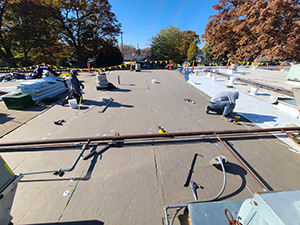
Many building owners assume TPO roof repair is only needed when damage is visible from above, but Indiana’s summer humidity often tells a different story. Vapor pressure can drive moisture from the warm interior upward through small membrane defects, saturating insulation beneath the surface before any visible signs appear. By the time soft spots or interior staining are noticed, moisture has often been present for weeks.
CVC Roofing performs TPO roof repair for commercial properties in Anderson, IN. Call 317-557-0888 to assess what is happening beneath your membrane and address hidden moisture issues.
Understanding how humidity affects TPO systems helps identify problems earlier, reduce repair scope, and protect the roofing system from long-term damage.
Impact of Humidity on TPO Roof Repair
Indiana summers bring steady, heavy humidity. Dew points across central Indiana often climb past 65 degrees Fahrenheit from June through August, pushing interior humidity levels in commercial buildings well above the drier air sitting above a hot TPO membrane. That difference creates vapor pressure, and vapor pressure drives moisture from high concentration to low. Through even small defects in the TPO, that moisture works its way upward into the roof assembly..
The defects that allow this migration are not dramatic. A pinhole at a fastener, a seam weld with marginal fusion, or a small crack at a flashing edge are all sufficient for vapor to pass through over time. None produce a visible leak or trigger a maintenance call. They simply allow slow moisture accumulation in the insulation below across an entire Indiana summer.
Wet Insulation
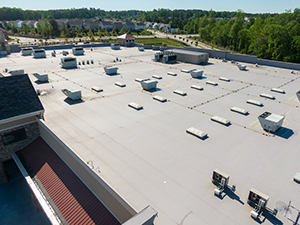
Saturated insulation beneath a TPO membrane does not announce itself. The surface looks identical to membrane over dry insulation, and foot traffic feels only slightly softer. The first evidence most building owners encounter is a pronounced soft spot after a wet summer, an interior moisture stain with no obvious exterior source, or rising energy costs from R-value loss.
Thermal imaging after sunset is the reliable detection method. Wet insulation retains heat longer than dry insulation as the roof cools overnight, creating a detectable temperature differential on an infrared scan. On an Indiana commercial roof that has been through multiple humid summers without a documented inspection, thermal imaging routinely reveals moisture patterns that span multiple roof sections, all originating from minor surface defects that would have been straightforward to repair if caught early.
Impact of Moisture
Repairing a TPO roof with vapor-driven insulation moisture is a two-part problem. The surface defect that allowed moisture entry needs to be identified and properly heat-welded or sealed using compatible TPO repair materials. DuroLast, and IB Roof Systems all have specific repair protocols for their membranes, and using incompatible patch materials on any of them produces a repair that holds short-term but fails in the long run.
The second part is the insulation. Wet insulation does not dry out on its own once the surface defect is repaired. Trapped moisture has nowhere to go once the membrane above it is sealed. In sections where saturation is confirmed, the membrane needs to be cut back, the wet insulation removed and replaced, and the membrane repaired or replaced over the new insulation. Skipping the insulation replacement and simply patching the surface is the repair approach that produces a callback six months later.
How to Reduce Vapor-Driven TPO Roof Repair Frequency
Vapor retarders installed below the insulation layer during TPO installation significantly reduce below-membrane moisture accumulation. On Indiana commercial buildings with high interior humidity sources like food processing facilities or laundries, a vapor retarder determines whether the TPO system performs for 20 years or requires repeated insulation repairs.
For existing TPO roofs without vapor retarders, the most effective protective step is an annual post-summer thermal scan in September or October, before Indiana’s cooler fall temperatures mask moisture signatures. Catching accumulation before it reaches saturation level allows targeted repairs rather than section replacements. One scan per year after Indiana’s peak humidity season costs far less than the repairs it prevents.
TPO Roof Repair Starts with Finding the Source
If your TPO roof has gone through multiple humid summers without a thermal inspection, moisture beneath the membrane is a real possibility even if the surface appears intact. Identifying the true source of the problem is what separates a repair that lasts from one that continues to fail.
CVC Roofing performs TPO roof repair and inspections for commercial properties in Anderson, IN. Call 317-557-0888 to evaluate your roof and determine what it is actually dealing with.
Using proper detection methods and manufacturer-specific repair approaches helps address hidden moisture, reduce repeat issues, and ensure the roofing system performs reliably over time.
FAQ
Can high indoor humidity in my building actually damage my roof?
Yes. Vapor pressure drives moisture from humid interior air through minor membrane defects into the insulation layer below, saturating it before any surface damage appears.
How do I know if my TPO roof insulation is wet without cutting into the membrane?
Infrared thermal scanning after sunset detects wet insulation through the temperature differential it holds compared to dry areas as the roof cools overnight.
Does a TPO roof repair fix wet insulation?
Surface repairs only address the entry point. Saturated insulation must be physically removed and replaced since it cannot dry out once the membrane above it is sealed.
What is the best time of year to inspect a TPO roof for moisture in Indiana?
September and October, after Indiana’s peak humidity season, when accumulated moisture is detectable via thermal scan but temperatures have not yet dropped enough to obscure the signature.