 Quality Services,
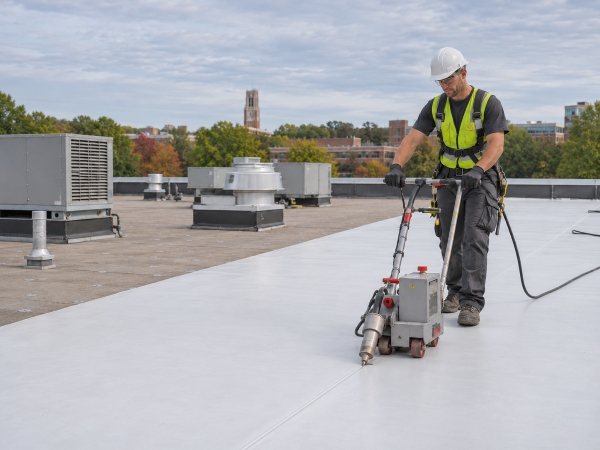
TPO roofing is one option for flat and low-slope commercial buildings in Fort Wayne, IN, including warehouses, retail properties and offices. TPO, short for thermoplastic polyolefin, is a single-ply membrane sold in white, tan and gray, and overlapping sheets are joined with heat-welded seams to create a weather-resistant roof surface. CVC Roofing & Sheet Metal installs single-ply systems including TPO, PVC and EPDM across its Indiana commercial service area, which includes Fort Wayne.
This guide explains how a TPO system is built, what affects performance on northeast Indiana buildings, and what to confirm before a project is priced. For a Fort Wayne building you are evaluating, call (317) 557-0888.
What TPO Roofing Is
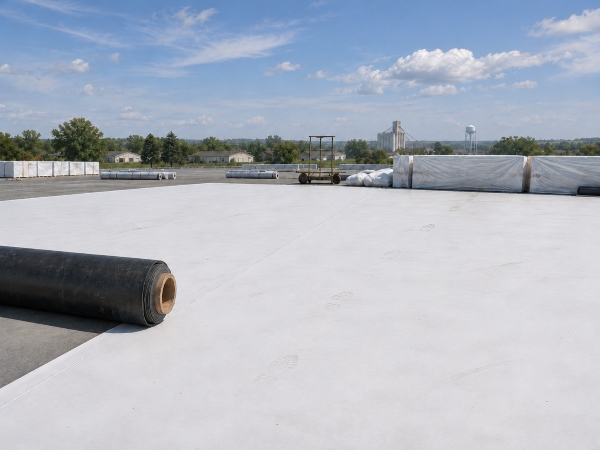
TPO membranes are available in different thicknesses, commonly including 45, 60 and 80 mil products, and are supplied in rolls. Sheets are installed over a specified supporting assembly that may include insulation and a cover board. Overlaps are heat-welded using equipment and procedures appropriate to the product. Thickness, underlying materials and weld quality all matter; membrane thickness alone does not establish the roof’s expected service life.
TPO assemblies commonly use mechanical attachment or adhesion, depending on the specified product and roof assembly. Fastened systems secure membrane and supporting components with approved fastener patterns. Adhered systems rely on compatible bonding materials and a suitable substrate. The decision depends on the deck, insulation, wind design, perimeter and corner conditions, and system approval. Do not assume an attachment approach used on one building can be carried over to another.
Why Building Owners Choose TPO
- Reflective surface. Light-colored TPO reflects more sunlight than dark roofing surfaces. Actual cooling-energy effects depend on insulation, climate and how the building operates.
- Welded seams. Hot air welding creates strong, continuous seams when the work is done on clean, dry material.
- Assembly weight. Membrane sheets are relatively lightweight, but the completed assembly weight also includes insulation, cover boards, attachment and any existing roofing kept in place.
- Repairability. A damaged area can often be cleaned and patched with compatible TPO materials.
- Insulation design. TPO can form part of an assembly with specified rigid insulation. Insulation type and thickness, rather than membrane color alone, affect thermal performance.
CVC’s page on single-ply roofing systems compares these membrane options and is a useful starting point if you are weighing TPO against PVC or EPDM.
How a Fort Wayne TPO Installation Works
The steps below describe the usual sequence on a commercial reroof. Exact details change with the building and the manufacturer’s specifications.
- Roof assessment. The existing roof is evaluated for moisture, deck condition, drainage and penetrations.
- Tear-off or recover decision. The existing assembly, moisture and deck conditions, applicable requirements and proposed manufacturer system determine whether removal is needed or a recover can be considered.
- Deck and insulation work. The agreed scope identifies any necessary deck repairs, insulation materials and attachment method, including how unexpected concealed conditions will be handled.
- Membrane installation. TPO sheets are rolled out, attached and welded, with extra attention to corners and transitions.
- Flashing and details. Walls, curbs, drains, pipes and rooftop equipment are flashed with membrane or prefabricated accessories.
- Final checks. The closeout scope should identify seam checks, flashing review, cleanup, and any documented drainage conditions requiring separate correction.
Details That Decide How Well TPO Performs
The membrane gets the attention, but the details around it usually decide how the roof ages.
| Detail | Why it matters | What to confirm |
|---|---|---|
| Seam welding | Proper weld preparation and quality help maintain weather resistance at overlaps | How seam quality and special details are checked under the specified system |
| Insulation and cover board | They affect energy performance and support the membrane | Thickness, R-value and board type are listed in the proposal |
| Drainage and slope | Persistent water may point to drainage or slope issues; the membrane does not correct them | Drainage path, outlets and any separately scoped slope correction |
| Edge metal and flashings | Perimeters and corners are important parts of wind-uplift design | Proposed edge metal, attachment and transition details |
| Rooftop equipment | Curbs and penetrations are common leak points | Proposed flashing details and whether protective walkways are included |
Fort Wayne Conditions to Plan For
Fort Wayne buildings experience cold winters, seasonal freeze-thaw conditions, rainfall and summer heat. The project should consider drainage outlets that can be obstructed by snow or debris, weather-sensitive installation steps, and wind exposure at edges and corners. Installation conditions must meet the selected product requirements, including surface preparation, temperature limits and moisture restrictions. Exact snow, wind and structural criteria depend on the building and applicable design requirements.
TPO for New Buildings and Reroofs
TPO may be specified for both new construction and suitable replacement projects. On new buildings, roofing details can be coordinated with the deck, mechanical layout and building envelope from the start. CVC describes its approach to new buildings on its new construction page. For an existing building, a TPO reroof may require removing deteriorated roofing and preparing the supporting assembly. CVC’s commercial roofing page explains the repair, coating and maintenance options that may apply if the current roof is still serviceable.
Questions to Ask Before Choosing a TPO Contractor
A written proposal should name the membrane product and thickness, attachment method, insulation and cover-board specifications where applicable, and flashing details for drains, walls, curbs and edges. It should clarify whether existing roofing is removed, how concealed damage is handled, whether drainage corrections are included, and what protection is planned for entrances, equipment access and occupied areas. Ask which closeout checks and documents are included. Warranty terms, if offered, should be taken from the actual proposal and documents rather than assumed from a general product description.
CVC Roofing & Sheet Metal brings 45+ years of combined industry experience to commercial roofing, and Fort Wayne building owners can reach the team at (317) 557-0888 to discuss a TPO project.
TPO Roofing FAQs
How long does a TPO roof last?
Service life depends on the assembly, installation, exposure, drainage and maintenance. Review actual written product and workmanship terms rather than assuming a universal lifespan.
Is TPO better than EPDM or PVC?
Not for every roof. TPO and PVC use welded seams, while EPDM is a rubber membrane with different seam detailing. Product compatibility, roof conditions and project requirements determine the better fit.
Can TPO be installed over an existing roof?
Sometimes, but only after the existing roof, deck, moisture and layer conditions are evaluated and a suitable recover assembly is confirmed under applicable requirements.
Can a TPO roof be repaired?
Localized damage may be repaired with compatible system materials and the prescribed preparation and welding methods, provided surrounding conditions remain suitable.