 Quality Services,
Commercial roof repair in Kokomo starts with one question: where is the water actually getting in? A stain on a warehouse ceiling or a wet spot near an office wall often sits far from the opening in the roof, so the repair has to be scoped from the roof surface, not the stain. CVC Roofing serves Kokomo, IN commercial properties, and repairs begin with finding the source, then deciding whether an isolated fix is practical or the roof needs a broader assessment.
This guide explains how leak symptoms differ from leak sources, what a useful inspection records, how membrane, flashing and drainage conditions shape the repair scope, and when a larger look at the roof makes more sense than another patch. For a Kokomo building you are concerned about, call (317) 557-0888. Related Kokomo pages cover rubber roof repair, flat roof repair and flat roof replacement.
Common Causes of Commercial Roof Damage
Commercial roofing materials can age through exposure to sunlight, wind, seasonal temperature changes and storm debris. In Kokomo, freezing temperatures and summer heat can stress roof details differently depending on the membrane and installation. Weather alone does not identify a leak source; a repair scope must distinguish ordinary surface weathering from an actual opening or failed connection.
Blocked drains or scuppers can allow water to remain on a low-slope roof, while deflection or an inadequate drainage layout may create recurring ponding. Prolonged water exposure can challenge vulnerable details, but ponding does not automatically mean that the membrane has failed. Roof traffic and equipment servicing can also cause punctures or disturb flashing, which should be assessed by location.
Leak Symptoms vs. Leak Sources
Water can follow structural members, the deck or interfaces between roof layers before it appears indoors. An interior stain may be some distance from the entry point, and a mark near a wall can have more than one possible cause. The symptom should be documented separately from the roof-side defect rather than treating its location as proof of the opening.
An investigation records where and when water appears, then examines plausible paths across the roof and adjoining wall or equipment details. Relevant areas include seams, flashing, penetrations, drains and places modified by later rooftop work. Interior stains, damp finishes and musty odors warrant investigation, but none alone proves the condition of concealed roof insulation. An appropriate inspection identifies observed defects, suspected sources and areas that require further testing.
Signs You Need Commercial Roof Repair
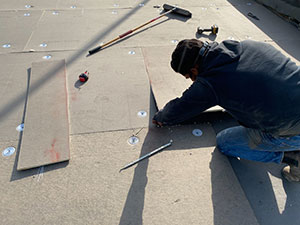
Ceiling discoloration or dripping may indicate water entry, while cracks, blisters, torn membrane, lifted seams and deteriorated flashing are possible roof-side findings. Standing water after rainfall deserves drainage review, especially when it recurs; the time it remains is a condition to record, not a stand-alone diagnosis. Roof-level investigation should be completed by qualified personnel, with occupants reporting interior evidence without climbing onto the roof.
What a Useful Roof Inspection Records
A roof inspection is only as useful as what it documents. A good record names the roof system, the age and condition of the membrane, and the locations of problems. It should note the following:
- Membrane condition. Splits, punctures, blisters, shrinkage, open or lifted seams and surface wear, marked by location.
- Flashing and terminations. Parapets, curbs, wall tie-ins, edge metal and sealants.
- Penetrations. Pipes, vents, conduit and rooftop units, and how each is sealed.
- Drainage. Drain and scupper condition, debris, ponding areas and gutter or downspout damage.
- Moisture. Areas of suspected or confirmed moisture, the test method and its limits; infrared patterns require appropriate confirmation before removal.
- Prior repairs. Earlier patches, coatings or sealant work and their condition.
A useful report also marks findings on a roof plan or by identifiable location, includes dated photographs and distinguishes confirmed observations from assumptions. Thermal images alone cannot establish wet insulation because roof construction, timing and environmental conditions can produce similar patterns. If direct testing is appropriate, the scope should say which locations and materials were checked. These details help establish whether work is confined to one repair area or requires more investigation.
How Roof Conditions Shape the Repair Scope
Repair material and preparation must match the installed assembly. TPO and PVC thermoplastic membranes commonly use compatible hot-air welded patches after appropriate cleaning and surface preparation; the two materials are not interchangeable. EPDM rubber generally relies on approved primer, seam tape, adhesive or patch details rather than heat welding. Any earlier coating, aging or contamination may affect adhesion, and the manufacturer-specific repair procedure governs the method.
Built-up roofs have different materials and repair details. Blisters, splits, exposed reinforcement, loss of surfacing and failed asphalt flashing need investigation of the existing plies and substrate before specifying compatible asphalt-based repairs. A localized blister is not automatic evidence of extensive saturation, and the crew should avoid trapping known wet material. The narrower built-up roof repair in Kokomo page addresses this assembly specifically.
Flashing and drainage can set the repair boundary as much as the membrane. At a wall, curb or edge, the contractor should determine whether the termination can be repaired in place or whether failed material must be removed and rebuilt. Drainage work is a separate decision: clearing a blocked outlet differs from correcting recurring low areas or structural deflection. Neither a surface patch nor a coating changes roof slope by itself.
Isolated Repair or Broader Assessment
A defined repair can be appropriate where the entry point is supported by evidence, nearby materials remain serviceable and the required compatible repair can be completed. Multiple defects, unknown moisture boundaries or deterioration extending beyond a single detail call for additional assessment. The table summarizes possible next steps, not automatic replacement thresholds.
| Condition | Usually points to |
|---|---|
| One puncture, a failed pipe boot or a single open seam | Isolated repair with a matching patch or flashing |
| Damage at one curb, wall or drain with dry insulation nearby | Localized flashing or detail repair |
| Leaks that return in different locations after repairs | Broader assessment of seams, flashing and moisture |
| Confirmed widespread wet insulation or deteriorated deck | Map and confirm the extent; evaluate removal and replacement of affected layers |
| Widespread cracking, shrinkage or brittle membrane across the roof | Evaluate wider repairs or replacement; restoration only if assembly is suitable |
A roof nearing the end of service life is not automatically beyond repair. Where findings show broad membrane failure or unserviceable supporting materials, a separate flat roof replacement scope may be worth comparing with repair. The original repair purpose remains limited to what can be corrected on the existing roof.
The Repair Process
After the entry point and repair boundary have been assessed, the written scope identifies the defects, roof material, preparation, repair method, flashing details and any affected insulation or decking. Repairing a puncture may involve a compatible membrane patch; a failed curb may need new flashing and termination details. If wet insulation is confirmed, the work should specify its removal and reconstruction to serviceable surrounding material. Completion checks can include patch and seam bonds, finished terminations, repaired locations and drainage conditions. The owner can retain a dated record of the work and any items requiring follow-up.
Why Timely Repair Matters
Active leaks can affect interior finishes, stored materials and equipment, and may create electrical or slip hazards. Persistent moisture can affect insulation and supporting roof materials, although the extent cannot be inferred from a ceiling stain alone. Reporting symptoms and arranging a qualified assessment helps establish the needed repair before additional conditions are assumed. A repair may reduce further exposure, but no contractor can guarantee that it prevents every future leak or business interruption.
Selecting a Commercial Roof Repair Contractor
A repair proposal should identify the inspected locations, compatible materials, necessary access and occupied-building protection, exclusions, and how concealed conditions will be handled if discovered. CVC Roofing reports more than 45 years of combined industry experience and works with commercial roof systems. For a Kokomo commercial roof repair assessment, call (317) 557-0888.
Frequently Asked Questions
How often should a commercial roof be inspected?
Spring and fall are common review points, with additional checks after significant storms or new symptoms. The appropriate frequency depends on the roof system, condition and written requirements.
Can small leaks be ignored if they do not affect daily operations?
No. A minor interior symptom can come from a localized opening or a more extensive issue. Document the symptom and have the source assessed before hidden damage is assumed.
What materials are commonly used in commercial roof repairs?
Compatible repair materials vary by system: welded TPO or PVC patches, EPDM primers and tapes, or materials suited to built-up roofing. Damaged flashing and confirmed wet insulation may need replacement.
How do I know whether to repair or replace?
A targeted repair can fit a defined defect with serviceable surrounding material. Recurring leaks, confirmed widespread wet insulation, structural concerns or extensive membrane failures require a broader evaluation.