 Quality Services,
Commercial gutters are one part of a larger roof-drainage system. On a low-slope commercial building in Zionsville, IN, gutters, downspouts, scuppers, roof edges, and other drainage components need to work together so runoff reaches planned discharge points without creating recurring overflow or ponding concerns.
CVC Roofing & Sheet Metal confirms Commercial Gutters within its commercial service scope. Property owners can call (317) 557-0888 to discuss gutter installation, repair, or drainage concerns for the building.
Start With How Water Moves Across the Roof
A gutter should not be selected in isolation from the roof that feeds it. Roof area, slope, drainage paths, scuppers, edge details, outlet locations, and downspout capacity can all affect how much water reaches a given section and where it needs to go next.
If a building has recurring drainage issues, the useful question is not simply whether the gutter looks large enough. The roof and gutter system should be evaluated together so the contractor can identify whether the problem involves capacity, blockage, pitch, outlet placement, roof geometry, or another condition.
Commercial Gutter Sizing Depends on the Building
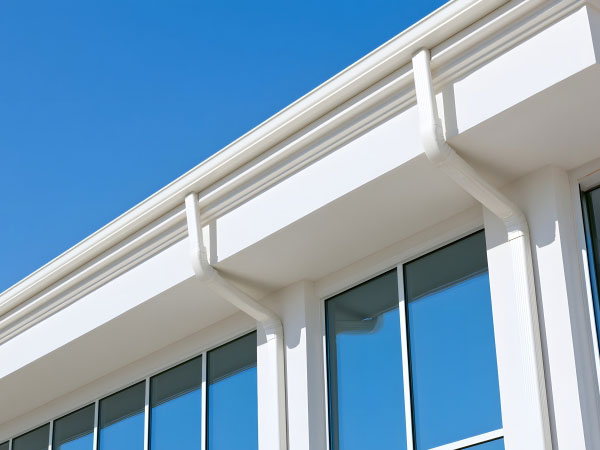
Commercial gutter and downspout sizing can depend on contributing roof area, local rainfall design criteria, gutter profile, outlet count, downspout capacity, and discharge locations. A standard residential-size gutter should not be assumed to fit every commercial building.
Overflow does not automatically prove the system is undersized. Blocked outlets, debris, damaged sections, improper pitch, limited downspout capacity, or a poor discharge path can create similar symptoms. The cause should be identified before resizing is recommended.
Roof-Edge Details Matter
Where gutters meet the roof edge, the attachment and waterproofing details need to suit the existing roofing system. Edge metal, membrane terminations, flashing, scuppers, and other components may all affect how the gutter is installed or repaired.
Sealant alone should not be treated as the primary waterproofing strategy for a roof-edge detail. The proposal should explain how the gutter work connects with the existing roof system and whether any damaged edge or flashing components need separate repair.
Drainage Problems Can Look Like Roofing Problems
Water staining near a roof edge, recurring overflow, wet exterior walls, or erosion near a discharge point can indicate that runoff is not being managed as intended. Those signs can involve the gutter system, but they can also involve roof-edge details or the discharge path beyond the downspout.
CVC Roofing & Sheet Metal’s commercial roofing services in Indianapolis provide related context for evaluating roofing, maintenance, and drainage concerns as connected parts of the building rather than as isolated repairs.
Maintenance Should Match Debris and Exposure
There is no universal cleaning schedule for every commercial gutter system. Maintenance frequency depends on nearby trees, roof debris, roof layout, previous clogs, weather exposure, downspout configuration, and how quickly material accumulates.
Property managers should watch for standing water in gutter sections, loose attachments, separated seams, damaged outlets, blocked downspouts, or overflow during rain. Those symptoms should prompt evaluation even if the system was cleaned recently.
Material Choice Should Follow the Project
Commercial gutters can be fabricated from different materials and gauges, but the right choice depends on the building, gutter profile, attachment method, exposure, maintenance needs, and project specifications. Material should not be selected from a generic rule that one metal is always the best option.
Ask what material and thickness are being proposed, why they fit the building, and how seams, joints, fasteners, hangers, and transitions will be handled. A useful proposal should describe the system rather than only naming the gutter material.
Check the Downspout and Discharge Path
A gutter can collect water correctly and still leave a drainage problem if the downspout or discharge point sends runoff to an unsuitable location. Grading, pavement, landscaping, drains, entrances, loading areas, and adjacent walls can all affect where water should go after it leaves the roof edge.
CVC Roofing & Sheet Metal’s commercial roofing services in Greenwood discuss drainage as part of broader roof planning and maintenance. For a gutter project, the final discharge path should be identified as part of the scope rather than left as an afterthought.
Know What a Gutter Evaluation Should Cover
A useful evaluation should document the gutter sections being served, visible condition, pitch, attachments, outlets, downspouts, discharge locations, roof-edge conditions, and any signs of overflow or repeated blockage. It should also identify what remains uncertain and whether additional roof or drainage investigation is needed.
The proposal should state whether the work is repair, partial replacement, or full replacement and explain what conditions could change the scope once damaged or concealed areas are opened.
Commercial Gutters in Zionsville, IN
CVC Roofing & Sheet Metal provides commercial gutter installation and repair as part of its commercial roofing scope. For a Zionsville property, the right project should be based on the roof area, drainage path, roof-edge details, outlet capacity, downspout routing, and existing gutter condition.
Call (317) 557-0888 to discuss the building and the gutter or drainage conditions that should be evaluated before the scope is finalized.
Frequently Asked Questions
How do I know whether my commercial gutters are undersized?
Overflow can be a sign of limited capacity, but blockages, pitch, outlet placement, downspouts, or damage can cause similar symptoms. The system should be evaluated before sizing is blamed.
How often should commercial gutters be cleaned?
There is no universal interval. Cleaning frequency should reflect debris exposure, previous clogs, weather, roof layout, and how quickly the gutters and downspouts collect material.
Can gutter problems damage a commercial roof?
Poor drainage can contribute to water collecting near roof edges or other vulnerable areas, but the actual source should be identified before assuming the gutter is responsible for a roof leak.
What should a commercial gutter proposal include?
It should define the gutter sections, profile, material, attachment approach, outlets, downspouts, discharge points, roof-edge work, repair limits, and any conditions that could change the scope.