 Quality Services,
Before authorizing a commercial roof replacement in Kokomo, IN, an owner should confirm why replacement is being recommended, whether the existing roof should be removed or may be suitable for a recover, how concealed deck and insulation conditions will be handled, and how the work will be coordinated around an occupied building. Those details should be clear in the written scope before the project begins.
CVC Roofing & Sheet Metal serves commercial properties in Kokomo and provides commercial roofing systems including TPO, PVC, and EPDM single-ply roofing. Call 317-557-0888 to discuss a specific roof. For the separate question of warning signs, materials, and broader replacement considerations, see the guide to flat roof replacement in Kokomo.
Is It Repair or Replacement?
A commercial roof should not be replaced simply because it has one leak or one damaged detail. Localized defects may still support a repair, while repeated failures or wider deterioration can make replacement the more practical scope. Before approving replacement, ask what evidence supports the recommendation.
- Is the damage limited to one seam, flashing detail, penetration, puncture, or roof section?
- Are leaks recurring in several areas after prior repairs?
- Is moisture suspected beyond one localized section of insulation?
- Is the membrane deteriorated, separating, shrinking, or failing across multiple areas?
- Are deck, drainage, or supporting-material conditions likely to broaden the project?
If the problem remains localized, commercial roof repair in Kokomo may be the appropriate path. A commercial roof inspection can document visible conditions and help identify whether further investigation is needed before the final replacement scope is written.
Tear-Off or Recover: What Each Quote Should Explain
A tear-off removes included existing roofing so the underlying assembly can be exposed and the new roof installed over the prepared substrate. A recover leaves approved existing materials in place and installs a new system over them. Neither approach is automatically better. Recover suitability depends on the existing roof layers, moisture condition, insulation and deck, attachment, drainage, roof design, and applicable project or roofing-system requirements.
| Item to Compare | Tear-Off | Recover |
|---|---|---|
| When it may fit | When existing materials, concealed moisture, deck conditions, multiple layers, or project requirements make removal necessary | When the existing assembly and project requirements support leaving approved materials in place |
| Concealed conditions | More of the deck and insulation may become visible as existing materials are removed | The proposal should explain what evidence supports recover suitability and what happens if concealed moisture or deterioration is discovered |
| Debris and disruption | Usually involves more removal, disposal, staging, noise, and exposed-work sequencing | May reduce some removal work, but still requires access, staging, preparation, and coordination |
| What the quote should state | What is removed, how deck and insulation changes are handled, and how exposed areas are protected during work | Why recover is appropriate, what preparation is included, and how concealed conditions can change the scope |
Deck and Insulation Allowances
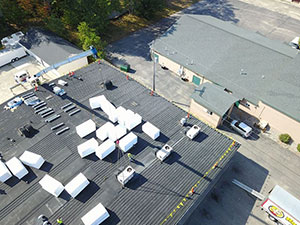
Deck and insulation conditions can remain partly concealed until roofing materials are opened or removed. A useful proposal explains how added work will be documented, measured, approved, and priced if damaged decking, wet insulation, or another concealed condition is discovered.
That process may use unit pricing, allowances, or another written change procedure. The important point is that the owner understands the process before tear-off begins. A bid that ignores concealed conditions may appear less expensive while leaving more of the actual project outside the base price.
Drainage and Flashing Details
A new roof membrane does not automatically correct an existing drainage problem. If water collects in low areas or around drains and scuppers, the contractor should identify the likely cause and explain whether drainage corrections are included. Tapered insulation, drain work, scupper changes, or other corrections may be considered when the roof design calls for them.
Flashing deserves the same attention. Walls, curbs, penetrations, roof edges, pipes, and rooftop equipment all need details that integrate with the selected roofing system. CVC Roofing & Sheet Metal installs commercial systems including TPO roofing and EPDM roofing, but the written proposal should identify the actual system and detailing selected for the building.
Planning Around an Occupied Building
Commercial roof replacement can affect building access, parking, loading areas, rooftop equipment, tenants, staff, inventory, and normal operations. The project plan should identify how those conditions will be managed rather than promise that the building will operate without interruption.
- Access: Identify crew routes, material deliveries, equipment staging, entrances, and parking restrictions.
- Phasing: Explain how work areas will be divided when phasing is appropriate and how unfinished sections will be protected.
- Protection: Define protection required for entrances, equipment, interiors, inventory, or occupied areas below the work.
- Noise and disruption: Identify work that may affect occupants and how schedule changes will be communicated.
- Weather: State how rain, wind, cold, or other unsuitable conditions can affect sequencing and temporary protection.
- Communication: Identify the project contact and the process for reporting schedule or scope changes.
Closeout and Records
Before the project is considered complete, compare the finished work with the written scope. Ask what closeout records will be provided. Depending on the project, that may include the final roofing-system description, approved change records, applicable written warranty documents, and any agreed photos or inspection records.
Workmanship and manufacturer coverage should be treated separately. Ask who provides each form of coverage, what is included or excluded, what maintenance conditions apply, and how a claim would be made. Do not assume a particular warranty term unless it appears in the actual project documents.
Ongoing roof care is a separate step after replacement. CVC Roofing & Sheet Metal’s commercial roof maintenance in Kokomo page covers that continuing maintenance question. Inspection timing should follow roof condition, severe weather, rooftop activity, drainage performance, and any written roofing-system requirements rather than one fixed schedule for every building.
Next Step for Kokomo Building Owners
Before approving replacement, compare proposals using the same assumptions for repair versus replacement, tear-off or recover, concealed deck and insulation conditions, drainage, flashing, access, weather, protection, and closeout. That makes it easier to understand why two bids differ and what each contractor has actually committed to provide.
CVC Roofing & Sheet Metal has more than 45 years of combined industry experience and serves commercial properties in Kokomo. To discuss a commercial roof replacement, call 317-557-0888.
Frequently Asked Questions
How long does a commercial roof replacement take?
The timeline depends on roof size, roofing system, tear-off or recover scope, concealed conditions, access, phasing, and weather. Ask for a written schedule that identifies the assumptions that could change it.
Can a business remain open during commercial roof replacement?
Often, but access, noise, staging, deliveries, weather protection, and rooftop work can still affect operations. The proposal should explain how those conditions will be coordinated for the building.
Should I always choose tear-off instead of a recover?
No. Recover may be appropriate when the existing assembly, moisture condition, deck, insulation, drainage, attachment, and project requirements support it. The proposal should explain the evidence behind the recommendation.
What should a commercial roof replacement quote include?
It should identify the roofing system, tear-off or recover scope, deck and insulation change process, drainage and flashing work, exclusions, schedule assumptions, occupied-building protection, and applicable written warranty responsibilities.