 Quality Services,
Commercial roofing bids in Greenwood, IN can look similar on the first page while covering very different work. Before comparing totals, a building owner or facility manager should confirm that each contractor is pricing the same roof condition, service, materials, exclusions, access requirements, and project protections. CVC Roofing & Sheet Metal provides commercial roofing services in Greenwood and throughout its Indiana service area. Call (317) 557-0888 to discuss your project.
How to Compare Commercial Roofing Bids for Your Project
A useful bid comparison starts with the investigation behind the proposal. An estimate based on a documented roof inspection is not directly comparable to one built largely on assumptions. CVC’s roof inspection information for Greenwood provides additional context on the types of conditions that can affect a commercial roofing scope.
| Bid Item | What to Confirm | Why It Matters |
|---|---|---|
| Confirmed services | The exact installation, repair, maintenance, coating, restoration, or replacement work included. | A broad phrase such as “roof work” can hide important scope differences. |
| Investigation scope | What was inspected, which conditions were confirmed, and what remains uncertain. | Different levels of investigation can produce very different assumptions and pricing. |
| Material or system specification | The proposed roof system, important components, preparation, thickness or coverage requirements where applicable, and installation method. | Generic labels do not establish that two contractors are proposing equivalent systems. |
| Exclusions and change conditions | What is excluded and how concealed deck, insulation, drainage, or other added work will be documented and approved. | Makes potential scope and cost changes visible before work starts. |
| Scheduling | Expected sequence, access needs, weather limitations, and how delays will be communicated. | Helps owners plan around operations without treating a projected completion date as a guarantee. |
| Occupied-property protection | How entrances, vehicles, tenants, rooftop equipment, deliveries, and areas below the roof will be protected. | Shows whether the proposal accounts for the building as an operating property. |
| References | Comparable completed commercial projects and references you can contact when available. | Provides project-specific context beyond general reviews or promotional claims. |
| Warranty responsibilities | What workmanship coverage addresses, what any manufacturer warranty addresses, and the written conditions for each. | Prevents different types of coverage from being treated as interchangeable. |
Questions That Reveal Incomparable Bids
Ask each contractor to explain what conditions were confirmed before pricing and which assumptions could change the scope. Does the proposal include removal and disposal if those steps are required? How will concealed damage be handled? Are drainage corrections, deck work, insulation work, access equipment, or code-driven changes included or excluded? The answers should be documented rather than left to a conversation that may be hard to reconstruct later.
Warranty questions also need to be specific. Ask what the contractor’s workmanship terms cover, whether a manufacturer warranty is included or available, what maintenance or documentation requirements apply, and who is responsible for each obligation. The actual written documents control those terms.
Installation Scope and System Details
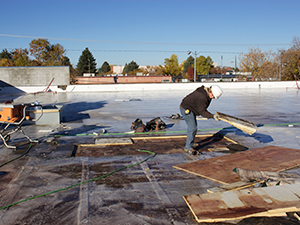
CVC Roofing & Sheet Metal’s current commercial scope includes metal roofing, standing-seam metal roofing, single-ply installation, coatings and restoration, commercial gutters, and general commercial roofing. For single-ply projects, its single-ply roofing information for Greenwood provides more system-specific context.
The proposal should still describe the actual system being installed on your building, including preparation, insulation or cover-board requirements where applicable, attachment or installation method, flashing and penetration details, drainage work, and any roof areas that are excluded. Do not assume that two bids using the same general system name include the same assembly.
Repair, Maintenance, and Occupied-Building Planning
Repair and maintenance scopes should identify the defect or condition being addressed, the preparation and repair method, and how surrounding roof areas were evaluated. If a coating or restoration system is being considered, suitability should depend on the existing roof, moisture, substrate condition, drainage, compatibility, and required repairs rather than on a blanket promise to extend roof life.
Occupied properties require additional planning. Ask how access, staging, debris, entrances, deliveries, equipment, and work below the roof will be handled. A proposal should explain the planned controls without promising zero disruption, because actual conditions, weather, and building operations can affect the work.
Compare the Contractor as Well as the Proposal
The written scope is central, but owners should also compare how contractors communicate, document changes, and manage responsibilities. CVC’s commercial roofing companies article for Greenwood addresses broader contractor-evaluation questions while this page stays focused on comparing bids for a specific project.
Before approving a bid, make sure you understand what is included, what is excluded, what remains uncertain, and how changes will be approved. A lower total may reflect a narrower scope rather than equivalent work at a lower price.
Commercial Roofing Services in Greenwood, IN
For a Greenwood commercial roofing project, compare the evidence behind the recommendation, the written system or repair scope, exclusions, schedule assumptions, occupied-property protections, references, and warranty responsibilities together. That gives you a clearer basis for comparing contractors than price alone.
Call CVC Roofing & Sheet Metal at (317) 557-0888 to discuss commercial roofing services in Greenwood, IN.
Frequently Asked Questions
How do I know whether two commercial roofing bids are comparable?
Confirm that they address the same roof condition, service, system specification, exclusions, access requirements, property protections, and warranty responsibilities.
Should I automatically choose the lowest commercial roofing bid?
No. Compare the written scopes first, because a lower total can reflect different assumptions or omitted work rather than equivalent work at a lower price.
What should be clear about commercial roofing warranties?
Review the actual workmanship and manufacturer terms, if applicable, including coverage, exclusions, maintenance requirements, and who is responsible for each obligation.
What should happen if concealed damage is found after work begins?
The proposal should explain how added work will be documented, priced, and approved before the contractor expands the original scope.