 Quality Services,
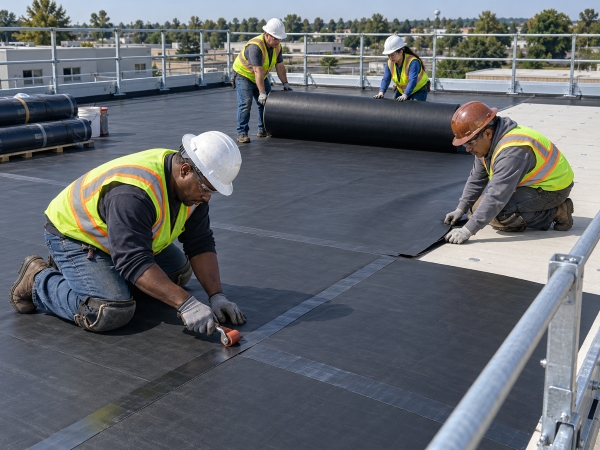
EPDM roofing in Greenwood, IN can be a strong option for a commercial flat or low-slope roof when the existing roof, deck, insulation, drainage, rooftop use, and attachment requirements support the system. CVC Roofing & Sheet Metal installs single-ply roofing systems, including EPDM, TPO, and PVC, for commercial properties in Indiana.
The useful question is not whether EPDM is generally durable. It is whether EPDM matches the building, the exposures on the roof, and the scope required to install it correctly. Seams, flashing, drainage, substrate condition, rooftop traffic, and concealed moisture can all change the recommendation.
What EPDM Roofing Is
EPDM, or ethylene propylene diene monomer, is a synthetic rubber membrane used on commercial flat and low-slope roofs. It is installed as a single-ply roofing layer over an approved roof assembly and can be attached in different ways depending on the project design.
EPDM is commonly black, although other surface options exist. Its flexible rubber construction is one reason it is considered for buildings exposed to changing temperatures, but the membrane alone does not determine roof performance. The insulation, deck, attachment method, seams, flashing, drainage, and workmanship all matter.
When EPDM May Be a Good Fit
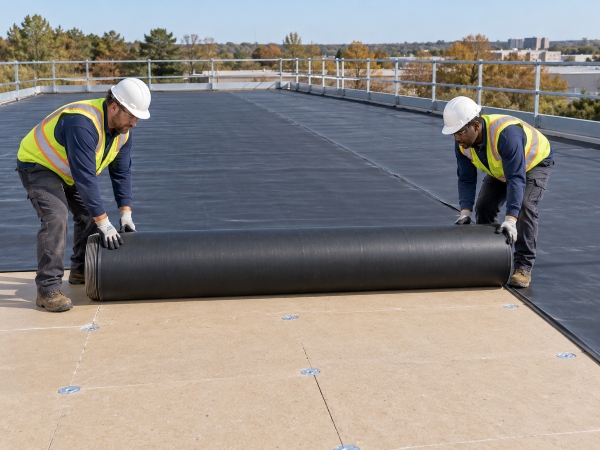
EPDM may be worth considering when the building has a flat or low-slope roof and the membrane’s characteristics fit the project. Situations that can support an EPDM decision include:
- Large roof areas: Wide membrane sheets can reduce the number of field seams on some roof layouts.
- Cold-weather flexibility: EPDM remains flexible at low temperatures, which can be useful where the roof experiences seasonal temperature changes.
- Simple roof geometry: Roofs with fewer penetrations and transitions can simplify membrane layout and flashing work.
- Buildings without specialized chemical exposure: General commercial roofs may be better candidates than roofs exposed to materials that can affect rubber membranes.
These conditions do not guarantee that EPDM is the right answer. The final choice should follow the actual roof and the written system design.
When TPO or PVC May Deserve Comparison
Other single-ply systems may fit better depending on building use and project priorities. CVC’s TPO single-ply roofing page provides a local comparison point for a light-colored thermoplastic membrane.
Reflective roof surfaces may be useful where reducing solar heat absorbed at the roof surface is a priority, but they do not guarantee a particular reduction in cooling costs. Insulation, HVAC efficiency, roof construction, sun exposure, and building use all affect energy performance.
PVC is often considered where the roof may be exposed to grease, oils, or certain chemical discharges. The actual exposure should be reviewed rather than assuming one membrane is automatically best for every restaurant, industrial building, or warehouse.
EPDM Suitability at a Glance
| Building Condition | What It Means for an EPDM Decision |
|---|---|
| Large, relatively simple roof area | May support efficient membrane layout with fewer field seams, depending on roll size and roof geometry. |
| High cooling-load concerns | Compare EPDM surface options with lighter TPO or PVC systems and evaluate the whole roof assembly rather than surface color alone. |
| Grease, oil, or chemical exposure | Confirm membrane compatibility with the actual exposure before selecting EPDM. |
| Frequent rooftop traffic | Plan service paths and protection where technicians or other trades regularly cross the roof. |
| Recurring drainage problems | Evaluate the drainage issue separately instead of assuming a new membrane will correct slope, low areas, or outlet problems. |
Check the Existing Roof Before Choosing the System
The current roof condition affects whether an EPDM project is an overlay, a tear-off, or part of a larger repair or replacement scope. The contractor should review the existing roofing, insulation, deck, drainage, previous repairs, flashing, penetrations, and rooftop equipment before the final scope is set.
Interior stains or visible defects can indicate water entry, but they do not show how far moisture has traveled within the roof assembly. If concealed moisture is suspected, the contractor should explain what can be confirmed and whether additional investigation is needed before deciding what materials can remain in place.
Attachment Method Is Part of the Roof Design
EPDM systems can be fully adhered, mechanically attached, or ballasted when the building and selected system allow it. Each method places different demands on the deck, insulation, structural capacity, fasteners, adhesives, perimeter design, and roof layout.
A fully adhered system uses adhesive across an approved substrate. A mechanically attached system uses fasteners and plates according to the design. A ballasted system uses added weight to hold the membrane in place and therefore requires structural and drainage considerations. The proposal should identify the attachment method and why it fits the building.
Seams and Flashing Need Careful Detailing
EPDM seams and flashing details are important parts of the waterproofing system. The exact seam materials and procedures depend on the system being installed, but clean surfaces, compatible products, correct preparation, and careful workmanship all matter.
Walls, curbs, pipes, drains, roof edges, and rooftop equipment create transitions where the membrane must be detailed correctly. Building owners should ask how these areas will be handled rather than judging a proposal by membrane thickness alone.
Drainage Should Be Evaluated Separately
A new EPDM membrane does not automatically correct poor slope, blocked drains, settlement, low areas, or outlet problems. If water repeatedly remains on the roof, the cause should be evaluated before the project scope is finalized.
The solution may involve drain work, tapered insulation, localized slope correction, or another adjustment when appropriate. Those items should be identified in the scope rather than assumed to be solved by changing the membrane.
Maintenance and Repair Over Time
EPDM roofs need ongoing attention, but there is no single inspection interval that fits every building. The schedule should reflect roof condition, drainage, repair history, rooftop traffic, severe-weather exposure, debris, and any written maintenance requirements that apply to the installed system.
Useful maintenance can include keeping drainage paths clear, checking seams and flashing, reviewing traffic areas, and addressing punctures or other damage when found. CVC’s rubber roof repair in Greenwood page covers repair situations that can develop on rubber membrane roofs.
When Repair or Replacement Becomes the Better Discussion
A localized defect does not automatically mean the roof needs replacement. When surrounding materials remain serviceable, a defined repair may be appropriate. A roof inspection can help establish whether the condition is isolated or part of a broader problem.
Repeated failures in several areas, widespread membrane deterioration, suspected moisture beyond isolated defects, or substrate concerns may justify comparing a broader repair or flat roof replacement scope. The decision should follow actual roof condition rather than age alone.
Questions to Ask Before Choosing EPDM
- What is the condition of the existing roof, insulation, and deck?
- Is the project an overlay, tear-off, or another scope, and why?
- What attachment method is proposed?
- How will seams, walls, curbs, drains, penetrations, and roof edges be detailed?
- How will moisture concerns be evaluated before installation?
- Does the building have grease, oil, chemical, or unusual rooftop exposure?
- How will drainage problems or low areas be handled?
- How will regular rooftop traffic be protected?
- What written warranty terms apply to the specific installed system?
EPDM Roofing in Greenwood, IN
CVC Roofing & Sheet Metal serves commercial properties in Greenwood, IN and offers single-ply roofing that includes EPDM, TPO, and PVC. For a Greenwood building owner, the strongest EPDM decision starts with the condition of the existing roof and a proposal that clearly defines attachment, seams, flashing, drainage, insulation, and rooftop-use considerations.
Property owners can call CVC Roofing & Sheet Metal at (317) 557-0888 to discuss the roof and the single-ply options that may fit the building.
Frequently Asked Questions
Is EPDM a good choice for a commercial roof in Greenwood?
It can be when the roof condition, deck, insulation, drainage, building use, exposure, and attachment requirements support the system. The decision should follow the actual roof rather than the membrane name alone.
Is EPDM better than TPO?
Neither is better for every building. EPDM and TPO differ in surface characteristics, seam systems, exposure considerations, and project design, so the better fit depends on the building and roof scope.
Can EPDM be installed over an existing roof?
Sometimes. An overlay depends on the existing roof assembly, moisture, substrate condition, structural considerations, local requirements, and the selected EPDM system.
How long does an EPDM roof last?
There is no single service-life number that applies to every EPDM roof. Installation quality, system design, drainage, weather exposure, rooftop traffic, maintenance, and building conditions all affect performance over time.