 Quality Services,
Commercial gutter installation in Anderson, IN should be sized around the building’s actual drainage demand, not a residential rule of thumb. Roof area, drainage layout, outlet capacity, downspout routing, fascia condition, and the approved discharge location all affect whether the system can move water away from the building without creating new problems at the roof edge or ground level.
CVC Roofing & Sheet Metal includes commercial gutters within its current commercial roofing scope and serves Anderson, IN. Building owners planning new gutters should confirm the installation scope, how the system was sized, what existing conditions need repair first, and how flow will be checked before closeout.
Commercial Gutter Installation Done for Scale

A commercial gutter system should be designed around the roof areas that feed each outlet and downspout. Long runs, multiple roof sections, low-slope drainage, parapets, rooftop equipment, and the location of existing drains can all affect how water reaches the perimeter.
The installation scope should therefore identify gutter dimensions, outlet locations, downspout capacity, attachment details, slope, and discharge routing for the actual building. CVC’s commercial roofing services provide broader context for coordinating roof-edge drainage with the rest of the commercial roof system.
What Happens When Gutter Drainage Falls Short
Overflow is a symptom, not a diagnosis. Debris at an outlet can cause overflow even when the gutter is large enough. A sagging run can hold water and change the effective slope. A poorly placed downspout can overload one section while another section remains underused. Water discharged too close to the building can create a separate ground-drainage problem even when the gutter itself is functioning.
The roof edge and fascia also matter. If attachment surfaces are deteriorated, installing new gutters without addressing that condition can leave the new system dependent on a weak support. The written scope should state whether fascia or other supporting materials need repair before gutter installation proceeds.
What to Verify Before You Sign Off
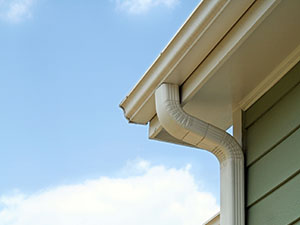
Before closeout, review the drainage system with the installer and confirm that the work matches the approved scope.
| What to check | What the scope should confirm |
|---|---|
| Joints and seams | Connections, corners, outlets, and end conditions are completed according to the selected system and show no obvious gaps or incomplete detailing. |
| Hangers and supports | Attachment type and spacing match the gutter system, substrate, expected loads, and project requirements rather than a generic spacing rule. |
| Downspouts | Outlet and downspout locations match the roof’s drainage layout and provide enough capacity for the areas feeding them. |
| Fascia condition | Supporting surfaces are suitable for the planned attachment, with deteriorated sections addressed where required by the scope. |
| Discharge routing | Downspouts discharge to the approved location without simply concentrating roof water against the building or into an unsuitable traffic area. |
| Maintenance access | Outlets, downspouts, and other service points can be reached safely for cleaning and inspection under the building’s maintenance plan. |
Professional Sizing and Closeout Flow Checks
Sizing should consider how much roof area drains to each gutter run, how quickly water reaches the perimeter, where outlets can be placed, and where downspouts can discharge. The right answer is project-specific. One commercial building may need several shorter drainage runs, while another may use longer runs with different outlet placement.
Closeout should include a practical flow check or other verification appropriate to the project so the owner can confirm that water moves toward the intended outlets and that the downspouts discharge where the plan requires. The check should also identify standing water, reverse slope, blocked outlets, leaking connections, or other conditions that need correction before acceptance.
Cleaning, Localized Repair, or Full Replacement
Not every gutter problem requires replacement. Debris buildup or a blocked outlet is primarily a cleaning issue if the rest of the system remains serviceable. A loose hanger, isolated leaking joint, damaged short section, or localized downspout problem may support a targeted repair.
Replacement becomes more reasonable to evaluate when deterioration is widespread, runs repeatedly sag or separate, supporting materials need broader correction, or the existing layout and capacity do not fit the roof’s drainage demand. Repeated overflow should be investigated before assuming the gutter is undersized because blockage, slope, outlet placement, or discharge restrictions can produce similar symptoms.
For ongoing roof and drainage planning, see CVC’s commercial roof maintenance in Anderson and roof inspection guidance. These services can help owners coordinate gutter observations with the condition of the roof edge, drainage points, and surrounding roofing system.
Gutter Installation in Anderson, IN
A useful gutter-installation proposal should explain sizing, attachment, downspouts, fascia conditions, discharge routing, exclusions, and closeout verification clearly enough for the owner to know what is being installed and how it will be accepted. Preserve access for future cleaning and inspection so routine drainage work does not become difficult after the project is complete.
Contact CVC Roofing & Sheet Metal at (317) 557-0888 to discuss commercial gutter installation in Anderson, IN.
Frequently Asked Questions
How do I know if my commercial building needs gutter cleaning, repair, or replacement?
Cleaning fits debris and blockage problems when the system is otherwise serviceable. Localized damage may support repair, while widespread deterioration, repeated separation, or an unsuitable drainage layout can justify replacement evaluation.
What determines the right gutter size for a commercial building?
Roof area, drainage layout, slope, outlet capacity, downspout placement, discharge routing, and the selected gutter system all affect sizing. The scope should be based on the actual building rather than one standard commercial size.
What should I check before accepting a new gutter installation?
Confirm joints, supports, outlets, downspouts, fascia conditions, discharge routing, maintenance access, and the results of the project’s closeout flow verification.
How often should commercial gutters be inspected?
Inspection frequency should reflect debris exposure, roof configuration, building use, storm history, and the maintenance requirements for the installed system. New overflow, visible damage, or major weather events can justify an earlier check.