 Quality Services,
Anderson’s commercial corridor runs heavy with manufacturing plants, warehouses, and light industrial buildings, most topped with wide, low-slope roofs that face central Indiana’s weather. For these buildings, EPDM roofing has earned its reputation as a dependable, long-lasting membrane that holds up through the region’s sharp seasonal swings.
Call CVC Roofing & Sheet Metal at (317) 557-0888 for EPDM roofing in Anderson, IN.
How EPDM Roofing Survives Indiana Freeze-Thaw Cycles
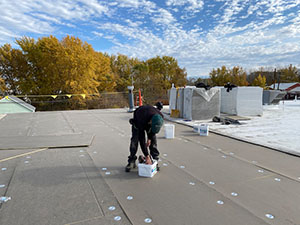
EPDM holds up in central Indiana because it stays flexible across an enormous temperature range, from sub-zero January nights to humid summer afternoons. EPDM stands for ethylene propylene diene monomer, which is a synthetic rubber membrane built for exactly this kind of climate stress. As temperatures rise and fall, the membrane expands and contracts with the building instead of cracking the way stiffer materials do.
Freeze-thaw cycling is the bigger threat in Madison County. Water works into small gaps, freezes overnight, expands, and pries those gaps wider, then thaws and repeats the process dozens of times each winter. A rubber membrane that flexes with each cycle resists that damage far better than a rigid surface. Many older industrial roofs around Anderson that were re-covered with EPDM are still watertight decades later.
What Makes EPDM Roofing Last 20 to 30 Years
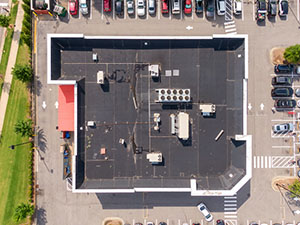
The main advantages of EPDM are long service life, strong UV resistance, and low upkeep. A properly installed membrane commonly lasts 20 to 30 years, and the rubber resists the ultraviolet breakdown that ages many roofing materials. Sunlight dries out and cracks many flat roof surfaces over time, and EPDM was formulated to shrug off that exposure.
There is also a practical advantage for buildings with rooftop equipment, which cover most manufacturing and warehouse properties here. EPDM is a single-layer membrane that is easy to inspect and repair, so a puncture from foot traffic or a dropped tool can be patched quickly without disturbing the rest of the roof. For a facility manager juggling schedules, that is worth a great deal.
How an EPDM Roof Gets Installed on a Flat Deck
An EPDM installation starts with the deck. Crews inspect and repair it, then add insulation board to bring the assembly to the right thermal value. The large rubber sheets are unrolled across the surface, allowed to relax, and then attached using one of a few methods depending on the building.
The membrane can be fully adhered with bonding adhesive, mechanically fastened with plates and screws, or held down with ballast, and the right choice depends on the deck type, wind exposure, and how the building is used. Seams between sheets are sealed with specialized tape or adhesive to form a continuous waterproof surface. Most commercial installations move quickly because there are fewer seams than with smaller-panel systems, so owners can expect limited disruption below.
How to Extend the Life of an EPDM Roof
An EPDM roof rewards a small amount of regular attention with many extra years of service. Twice-yearly inspections, ideally in spring and fall, catch the issues that shorten a roof’s life before they spread. The crew checks the seams, the flashing around penetrations, and the membrane surface, and clears debris from the drains.
Drainage deserves particular attention on Indiana flat roofs. Standing water after a storm puts steady stress on the membrane and seams, and a roof that drains cleanly outlasts one that ponds. Keeping drains clear, addressing minor seam lifts early, and scheduling a look after major storms carry an EPDM roof to the long end of its service range.
Is EPDM Roofing Right for Your Anderson Building?
For a commercial building facing Indiana’s freeze-thaw winters and humid summers, EPDM offers a proven balance of durability, flexibility, and easy upkeep. It has protected industrial and warehouse roofs across the region for decades and remains a sound long-term investment.
For EPDM roofing in Anderson, IN contact CVC Roofing & Sheet Metal at (317) 557-0888 today.
FAQ
How long does an EPDM roof typically last on a commercial building?
With proper installation and regular maintenance, an EPDM roof commonly lasts 20 to 30 years, often longer with good drainage.
Is EPDM a good choice for a building that sees heavy rain and harsh winters?
Yes, EPDM stays flexible in extreme cold and resists moisture, which makes it well suited to Indiana’s wet, freezing winters.
What is the difference between EPDM and TPO roofing for a commercial flat roof?
EPDM is a rubber membrane with taped or adhered seams, while TPO is a reflective thermoplastic with heat-welded seams.