 Quality Services,
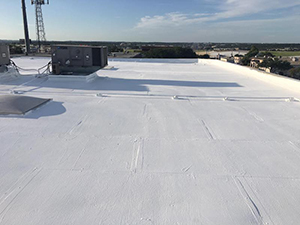
A commercial roof in Greenwood, IN is a good candidate for a roof coating when the roof is still sound: the insulation is dry, the existing surface is firmly bonded, the deck is solid, and water drains off the roof. A coating is a liquid-applied layer that seals and protects a roof that still has useful life. It does not dry wet insulation, restore an unsound deck, or correct deficient drainage.
CVC Roofing & Sheet Metal provides acrylic and silicone roof coating and restoration for commercial buildings. This guide explains how to tell whether your roof is a restoration candidate, which conditions rule coating out, and what the process should include. To talk through a specific building, call (317) 557-0888.
What a Roof Coating Does
A roof coating is applied over the existing roof surface, so the old roofing stays in place. When it cures, it can form a continuous protective layer over properly prepared surfaces and reinforced details. Reflective formulations may reduce solar heat absorption, depending on the system. Some metal, single-ply, built-up and modified bitumen roofs may be candidates, subject to surface preparation, product compatibility and adhesion tests. Because it is a surface treatment, its results depend on what is underneath.
Is Your Roof a Restoration Candidate?
These checks decide the question more reliably than the roof’s age alone:
| Condition | Coating May Fit When | Repair First or Replace When |
|---|---|---|
| Moisture | Insulation and deck are dry, confirmed by inspection or testing | Insulation is wet or saturated; moisture trapped under a coating keeps the problem going |
| Adhesion | The existing surface is firmly bonded and a test patch holds | The membrane is blistering, delaminating, or separating from the substrate |
| Substrate | The membrane or metal is intact, with only minor cracks, seams, and fastener issues to repair | There is widespread splitting, rust-through, rotten or sagging deck, or many prior failed patches |
| Drainage | Water leaves the roof; any ponding is minor and the chosen coating is suited to it | Ponding results from a drainage or slope defect; a coating does not correct it |
| Compatibility | The coating is compatible with the existing roof type, and prior coatings or sealants are identified | The existing surface or prior products cannot be matched with a coating that will bond |
When Coating Is Not Appropriate
Coating should not proceed without corrective work when insulation is saturated, the deck is deteriorated, leaks affect multiple areas, or the membrane has lost its bond. In those cases, the right path is repair of limited problem areas or a full flat roof replacement. If the roof is a single-ply system with failing seams, see our notes on rubber roof repair and our single-ply roofing page for the other options. For limited damage, flat roof repair may be all that is needed.
Acrylic or Silicone
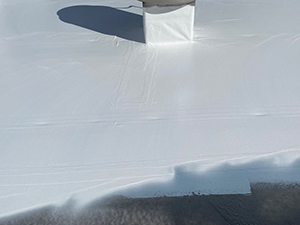
CVC offers both. Acrylic coatings may suit compatible roofs with adequate drainage and can offer reflective, UV-resistant finishes. Some silicone products are designed to tolerate periods of standing water, subject to their published requirements; they should still not be treated as a fix for a drainage defect. The right product depends on the existing roof, its drainage, and the building, and it should be confirmed after inspection rather than assumed.
What the Coating Process Should Include
- Inspection and testing: a documented look at the roof, with moisture findings and an adhesion check where appropriate.
- Preparation: cleaning, and removal of loose material, so the coating can bond.
- Repairs: sealing seams, flashings, penetrations, cracks, and fasteners before coating.
- Application: the coating applied in suitable weather, to the specified thickness, in the specified number of coats.
- Acceptance: a walkthrough to confirm coverage, edges, and details are complete.
- Follow-up inspection: a later check to catch problems, with periodic inspections to keep the coating in good condition.
Application depends on weather. Rain, high humidity, or cold can interfere with curing, so ask how the schedule will handle conditions.
Realistic Expectations on Lifespan, Savings, and Cost
A coating can extend a roof’s service life and may reduce cooling costs, but results vary with the existing roof, the product, the thickness, and maintenance. Treat any specific number of added years or energy savings as an estimate to confirm with the contractor in writing, not a promise. Coating is often less disruptive and less costly than replacement when the roof qualifies, but a roof that does not qualify can end up costing more if it fails early. Request a written scope and product identification. Where a manufacturer or contractor warranty is offered, review its actual terms and exclusions. A regular roof inspection helps you decide whether coating is realistic before you invest.
Next Step for Greenwood Building Owners
Collect the roof’s type, age, leak history, and any earlier inspection or repair records. To discuss whether your Greenwood roof is a coating candidate, call CVC Roofing & Sheet Metal at (317) 557-0888.
Frequently Asked Questions
Does roof coating stop leaks?
It can seal small cracks and seams on a sound roof. Active or widespread leaks, and wet insulation, usually need repair or replacement first.
Can a coating fix ponding water?
No. A coating does not correct a drainage or slope problem. Some silicone products tolerate standing water better, but the underlying drainage should still be addressed.
Will a reflective coating lower my energy bills?
It may reduce heat gain and cooling demand, but savings depend on the building, insulation, and roof, so they are not guaranteed.
What weather is needed to apply a roof coating?
Application and curing conditions must meet the selected product requirements for temperature, surface moisture and weather. Ask how work is rescheduled when conditions fall outside those limits.