 Quality Services,
For a commercial property in Kokomo, IN, choosing TPO should start with the building and roof assembly rather than a list of headline benefits. TPO is a single-ply membrane with heat-welded seams, but its suitability depends on the existing deck and insulation, drainage, attachment method, rooftop activity, detailing, and access needs. CVC Roofing & Sheet Metal provides commercial single-ply roofing in Kokomo and can evaluate whether TPO fits the project. Call (317) 557-0888 to discuss the building.
The selection decision should also account for future repairs. A membrane that fits the roof assembly, drainage plan, service traffic, and detail conditions is easier to maintain than one chosen only for reflectivity or general durability claims.
Is TPO the Right Fit for Your Building?
The following factors help define whether TPO is appropriate for a commercial roof. They are project questions, not universal pass-or-fail rules.
| Factor | What the Contractor Should Confirm |
|---|---|
| Substrate condition | Whether the deck, insulation, and existing roof conditions are suitable for the proposed assembly and whether moisture or damaged materials require corrective work first. |
| Drainage | How water will reach drains, scuppers, or edges and whether low areas or recurring ponding conditions need separate correction. |
| Attachment method | Whether the proposed attachment approach fits the deck, roof geometry, applicable design requirements, and the selected TPO system. |
| Insulation | What insulation is included, how it relates to thermal goals and drainage, and how the membrane assembly will be attached over it. |
| Rooftop activity | Where service traffic occurs and whether the project needs designated access paths, protection, or reinforced details around frequently serviced equipment. |
| Detailing and service access | How curbs, penetrations, walls, drains, edges, and rooftop equipment will be flashed and how future service work can reach equipment without unnecessary membrane damage. |
Compare TPO With the Complete Roof Assembly
TPO is commonly used on flat and low-slope commercial roofs, but the membrane is only one part of the system. Insulation, attachment, flashing, drainage, penetrations, and edge details all affect performance. The written proposal should identify the selected TPO system and explain the assembly that will support it rather than treating the membrane name as the entire specification.
Reflective TPO surfaces can reduce solar heat gain at the roof surface, but whole-building energy use depends on insulation, HVAC operation, air leakage, occupancy, climate, and other factors. Reflectivity can be a selection consideration without being treated as a guaranteed utility-bill result.
If you are comparing membrane types, CVC’s EPDM roofing guide for Kokomo provides a separate look at another single-ply option. The better choice depends on the building, roof details, project requirements, and the complete written system.
Seam and Repair Compatibility
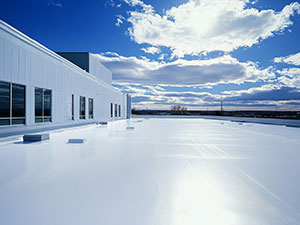
TPO seams are commonly joined with hot-air welding. That can allow compatible repair material to be welded to a serviceable membrane, but repairability depends on the condition of the existing surface, contamination, weathering, previous repair materials, and the requirements for the system being repaired. An aged or contaminated surface may require additional preparation or may not provide the same repair conditions as newer membrane.
Before approving a repair, ask the contractor to confirm the existing membrane type when it can be identified, the condition of the surrounding material, the compatible repair method, required surface preparation, and what the repair will and will not address. The repair decision should also account for conditions below the membrane when moisture or substrate damage is suspected.
Localized punctures, seam defects, and flashing problems may support repair when the surrounding roof remains serviceable. Repeated leaks, widespread deterioration, wet insulation, or broader substrate problems may require additional investigation or a replacement scope instead. CVC’s commercial roof replacement page covers that separate decision.
Use Inspection Evidence Before Choosing the System
A commercial roof inspection can document membrane condition, seams, flashing, penetrations, drainage, previous repairs, and visible evidence that may justify further moisture investigation. A surface inspection alone does not establish the full extent of concealed moisture, so the report should state what was observed, what remains uncertain, and whether additional investigation is needed before the scope is finalized.
For a new TPO system, the same evidence helps define preparation, insulation, attachment, flashing, drainage, and access requirements. For an existing TPO roof, it helps distinguish a limited repair from a condition that affects a larger area.
TPO Roofing in Kokomo, IN
TPO can be a strong commercial roofing option when the complete assembly fits the building and the project details are defined in writing. Before choosing it, confirm substrate and insulation conditions, drainage, attachment, rooftop activity, detailing, service access, and future repair compatibility. To discuss a Kokomo commercial roof, call CVC Roofing & Sheet Metal at (317) 557-0888.
Frequently Asked Questions
Is TPO the right roof for every commercial building?
No. TPO suitability depends on the roof assembly, drainage, attachment, insulation, rooftop activity, detailing, access needs, and project requirements.
Can an existing TPO roof usually be repaired?
Localized damage may be repairable when the surrounding membrane remains serviceable and a compatible repair method is available. Widespread deterioration or conditions below the membrane can change the scope.
What should a contractor confirm before repairing a TPO seam?
The contractor should confirm the surrounding membrane condition, compatible repair method, required preparation, relevant system requirements, and whether the defect is limited to the seam or part of a broader problem.
Does TPO guarantee lower energy costs?
No. Reflective TPO can reduce solar heat gain at the roof surface, but building energy use also depends on insulation, HVAC operation, air leakage, occupancy, climate, and other conditions.