 Quality Services,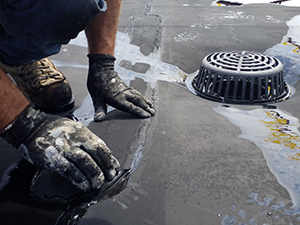
A rubber roof repair on a 10-year-old EPDM membrane and one on a 30-year-old membrane are not the same job, even if the visible damage looks identical. The material has changed. The way it bonds, flexes, and accepts adhesive has changed.
At CVC Roofing, we work on aged EPDM systems across Anderson, IN, and understand what those differences mean for a repair that actually holds. Call us at 317-557-0888 to schedule an inspection and find out what your roof needs.
Rubber Roof Repair on Older Systems Requires Expertise
EPDM has earned its reputation. The EPDM Roofing Association’s 2025 survey of 569 roofing professionals found expected service lives ranging from 25 years to more than 40 years. Some respondents even reported that roofs were still performing at 40, 45, and even 50 years of age. That longevity is real, but it comes with a caveat. The older an EPDM membrane gets, the more its physical properties shift, and those shifts directly affect how repair work needs to be executed. Contractors who do not account for that are setting up repairs to fail.
EPDM is a synthetic rubber that continues to cure after installation. A membrane that has been on a roof for 20 to 30 years is harder, less pliable, and significantly less receptive to bonding than it was when it was new. Standard lap adhesives and seam tapes that perform well on a fresh membrane may not achieve adequate bond strength on an aged surface without specific preparation. The aged surface needs to be cleaned, abraded, and primed before any patch or seam repair adhesive goes down. A contractor who skips those steps and applies tape or sealant directly to an old membrane is building a repair that lifts within a season.
Older Roofs before Proper Rubber Roof Repair
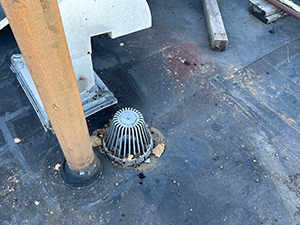
Membrane shrinkage compounds the problem. EPDM shrinks over time, especially in mechanically fastened systems where the membrane is not fully adhered across its surface. That shrinkage pulls the membrane away from walls, curbs, and penetration flashings, creating gaps and lifted edges that look like they can be sealed but are actually the result of ongoing dimensional movement. Patching a shrinkage gap without addressing the tension in the membrane just relocates the problem. The repair holds, and the membrane pulls away somewhere adjacent to it within a year or two.
The Adhesive Chemistry Problem on Aged Rubber Roofs
Not all EPDM adhesives are compatible with all surface conditions, and aged membranes narrow the window considerably. Solvent-based bonding adhesives require a clean, dry, and minimally oxidized surface to cure properly. An EPDM membrane with surface oxidation from decades of UV exposure needs aggressive cleaning and sometimes a primer coat before solvent adhesive will bond reliably. Water-based adhesives, which have become more common due to VOC regulations, are even more sensitive to surface condition and temperature during application. Indiana’s shoulder-season temperatures, where afternoon conditions look workable, but morning dewpoint is still high, create application windows that get misread.
Seam tape products used for field repairs on aged EPDM carry their own compatibility requirements. Some tapes are formulated for use on uncured EPDM laps, others for cured field membrane. Using the wrong product on an aged membrane surface is a common repair error that looks fine on day one and delaminate within months. A contractor who stocks one tape product and uses it on every job regardless of membrane age and condition is not doing the diagnostic work that aged rubber roofs require.
When Rubber Roof Repair Makes Sense on an Older System
Repair is still the right call on an older EPDM roof when the damage is localized and the field membrane away from the problem area has retained its integrity. A membrane that is flexible, well-adhered across the field, and not showing widespread surface cracking or brittleness is still a candidate for targeted repair even if it is old. The repair scope just has to match the actual condition. That means proper surface prep, age-appropriate adhesive selection, and a patch or flashing detail that accounts for the tension the membrane may be carrying.
Rubber Roof Repair Experts
When the membrane has gone brittle across large areas or has chronic ponding damage to the lap seams across the field, repair has crossed over into the territory where restoration or replacement is the honest recommendation. CVC Roofing gives building owners in Anderson, IN, a straight read on where that line is. Call us at 317-557-0888 and let us take a look at your system even before rubber roof repair is necessary.
FAQ
How can I tell if my EPDM membrane is too aged to repair effectively?
Surface brittleness, widespread cracking, and membrane that tears rather than stretches when probed at a seam edge are signs the material has degraded beyond reliable repairability.
Does EPDM membrane thickness affect how long repairs hold on older systems?
Thicker membranes, 60-mil and above, retain more flexibility over time and generally provide better patch adhesion than 45-mil membranes of the same age.
Can an older EPDM roof be restored instead of repaired or replaced?
Yes, a coating restoration system applied over a structurally sound but aged EPDM membrane can add significant service life without full tear-off, provided the substrate is dry and well-adhered.
Is it normal for an EPDM roof to shrink over time in Indiana’s climate?
Some degree of shrinkage is common in mechanically fastened EPDM systems over time, and Indiana’s wide seasonal temperature swings accelerate that process compared to milder climates.