 Quality Services,
When a commercial building owner asks how long single-ply roofing will last, the honest answer is that the membrane type is only part of the equation. At CVC Roofing, we install TPO, PVC, and EPDM systems on commercial buildings across Anderson, Indiana, and we see firsthand how much installation quality, membrane thickness, drainage design, and maintenance frequency separate a 15-year roof from a 30-year one.
For related commercial roofing guidance in Anderson, see EPDM Roof Installation Anderson, IN and flat roof sealing in Anderson.
Call CVC Roofing at 317-557-0888 for a free inspection and a straight conversation about what your building’s roof can realistically deliver.
The Real Lifespan of Single-Ply Roofing
Indiana puts commercial roofs through a full range of stresses. Hot, humid summers load the reflective properties of white membranes. Hard winters and repeated freeze-thaw cycles test seam integrity and flashing adhesion. Spring storms bring rapid water loading that exposes drainage deficiencies fast. Understanding how each single-ply system responds to those conditions, and what determines whether a given roof reaches the top or bottom of its lifespan range, is what this article is about.
EPDM has the longest and best-documented performance record of the three main single-ply membranes. It has been in commercial use since the 1960s, and the data behind it is not theoretical. The EPDM Roofing Association’s 2025 survey of 569 roofing professionals found expected service lives ranging from about 25 years to more than 40 years depending on membrane thickness and attachment method. Many respondents also reported encountering EPDM roofs still performing at 40, 45, and even 50 years of age. Independent studies of in-service aged membranes found that EPDM with 17 to 32 years of field exposure often continued to meet key physical-property requirements. For Indiana commercial buildings where cold-weather flexibility matters, EPDM’s rubber chemistry holds an edge over thermoplastic membranes in freeze-thaw conditions.
Most Popular Single-ply Roofing Option
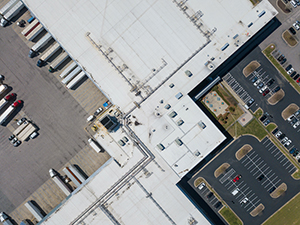
TPO is the most widely installed single-ply system today and carries a stated lifespan of 20 to 30 years. But building owners should understand that TPO entered widespread commercial use in the early 1990s and its formulation has changed significantly over that time. Early products experienced premature failures from heat aging and UV degradation. The Western States Roofing Contractors Association ran a long-term study of 60-mil TPO systems installed in 2000 to 2001 across four climate regions and found generally sound performance, though some early formulations from manufacturers who have since exited the market did not hold up. Modern TPO manufactured since roughly 2013 shows substantially better resistance to heat-induced cracking. The takeaway for Indiana building owners: a TPO roof from a reputable manufacturer installed in the last decade is a more reliable product than one installed 20 years ago.
What Membrane Thickness Does to Single-ply Roofing Lifespan
Thickness is one of the few lifespan variables a building owner can directly control at the time of specification. TPO and EPDM membranes are commercially available in 45-mil, 60-mil, and 80-mil thicknesses. Research and field data consistently show that thicker membranes outlast thinner ones by a meaningful margin. One analysis found that 80-mil TPO outlasts 45-mil by five to ten years in equivalent conditions. Manufacturer warranty periods reflect the same relationship: no reputable manufacturer offers the same warranty length on a 45-mil membrane as on an 80-mil. For Indiana commercial buildings with any rooftop foot traffic from HVAC service personnel, specifying at least 60-mil is the practical minimum. Buildings with regular rooftop access benefit from 80-mil.
PVC has been in commercial use since the 1960s, giving it a track record on par with EPDM. Its heat-welded seams and chemical resistance make it the right call for restaurants, manufacturing facilities, and buildings with rooftop chemical exposure. Its lifespan range of 20 to 30 years is consistent across the industry. PVC carries a higher initial investment than TPO, but for buildings where chemical compatibility is a factor, that premium is justified.
Why Seam Quality Determines Whether a Roof Hits Its Lifespan Ceiling
The single factor most responsible for a single-ply roof reaching the top of its lifespan range is seam execution. For TPO and PVC, seams are heat-welded using hot-air equipment. A properly welded seam is stronger than the membrane itself. An under-welded seam looks intact visually but fails within a few years of freeze-thaw cycling. Quality contractors probe-test all seams with a blunt tool to verify fusion, and any section that fails gets re-welded before the job is complete.
For EPDM, seam quality means proper adhesive coverage, surface preparation, and roller pressure on laps and flashings. A correctly bonded seam can outlast the building around it. A seam that was rushed or applied over a contaminated surface becomes a recurring repair call.
Single-ply Roofing Specialists
CVC Roofing installs single-ply roofing systems across Anderson, IN, with the seam discipline and manufacturer knowledge to give those roofs a real chance at their full service life. Call us at 317-557-0888 and let us show you what a properly specified and installed system looks like for your building.
FAQ
Does ponding water shorten single-ply roof life on Indiana flat roofs?
Yes, standing water accelerates seam adhesive degradation on EPDM and TPO and can undermine insulation below the membrane, reducing both performance and lifespan.
Does the attachment method affect how long a single-ply roof lasts?
Fully adhered systems generally outlast mechanically fastened systems of the same membrane type because the bond distributes stress more evenly and reduces membrane movement at seams.
How does membrane reflectivity change over time on a TPO or PVC roof?
Research shows unwashed TPO in industrial environments can lose around 40 percent of reflectivity over three years, which increases thermal load and accelerates UV aging if routine cleaning is skipped.
When should a single-ply roof be restored rather than replaced at end of life?
A restoration coating is worth evaluating when the membrane is still structurally sound and dry but showing surface wear, as it can add years of service at a fraction of replacement cost.