 Quality Services,
When a commercial roof starts giving a building owner trouble, the first question is often which single-ply roofers to call and what they should check before recommending a repair or a system. Single-ply membranes, including EPDM, TPO and PVC, are widely used on flat and low-slope roofs across Anderson, IN, but each behaves differently at seams, flashings and repairs. This article explains what single-ply roofers look at first and how an owner can assess a membrane system for a specific building instead of choosing on headline benefits alone.
CVC Roofing works on single-ply systems for commercial buildings in Anderson. To talk through a roof, call 317-557-0888.
How Single-Ply Roofers Assess a Roof Before Recommending a System
No single membrane is right for every building. A responsible assessment starts with the roof’s conditions and then narrows the options. The matrix below shows the factors a roofer should confirm and how each can affect the choice between systems such as EPDM, TPO and PVC.
| Factor | What the Roofer Should Confirm | How It Can Affect the Choice |
|---|---|---|
| Substrate condition | Deck type, moisture in existing insulation, surface condition and any old roofing left in place | Some membranes and attachment methods suit a given substrate better than others; wet or damaged material has to be addressed first |
| Drainage | Slope to drains, drain and scupper condition, areas where water stands | Persistent ponding stresses any membrane and can affect warranty terms, so it may influence the system and the details |
| Attachment | Fully adhered, mechanically attached or ballasted, and whether the structure and wind exposure suit it | Ballast adds weight; adhered and fastened systems depend on a compatible substrate and correct fastening |
| Insulation | Type, thickness and condition of insulation, and whether it is compatible with the membrane and attachment | Insulation affects both the roof’s thermal performance and how the membrane is attached |
| Rooftop activity | Foot traffic, service routes, equipment pads, grease or chemical exposure | Heavy traffic may call for walkway protection, and exposure to oils or chemicals can limit which membranes are appropriate |
| Detailing | Curbs, penetrations, parapets, edges, drains and transitions, and the flashing products to be used | Details can be vulnerable to water entry, so the flashing method must be compatible with the chosen membrane |
| Service access | Roof access, equipment staging, how repairs will be made and who will be able to make them | Repair methods differ by membrane, so future service needs should be considered when choosing |
Each membrane has its own page for deeper detail: EPDM roofing in Anderson and TPO roofing in Anderson. Written warranty terms, membrane thickness and product choices should come from the roofer’s proposal, not from general claims about a material.
The Problems Single-Ply Roofers Catch First
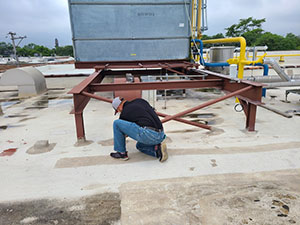
Most single-ply roof failures do not start as dramatic events. They begin as small, easy-to-miss issues that grow over months or years until water finds its way inside. Knowing the early warning signs helps owners decide what to watch for between professional inspections. A roof that gets regular attention is more likely to stay serviceable than one that is ignored until something leaks, and the condition of the details often matters more than the brand of membrane.
Seam Failures
Seams, where two sheets of membrane join, are a common trouble spot on single-ply roofs. On older or poorly installed systems they can separate, lift at the edges or develop gaps as the adhesive, tape or weld ages. Once a seam opens, water can work its way into the insulation below. Because moisture travels along the deck, the ceiling stain is often nowhere near the point of entry, and patching the visible stain without finding the actual failure fixes nothing. Roofers should investigate the actual entry point and any potentially affected insulation before selecting a compatible repair.
Additional Key Problems Identified
Beyond seams, a few other problems come up often on aging single-ply roofs in Indiana. Roofers commonly flag:
- Punctures and tears from foot traffic, dropped tools or storm debris that breach the membrane
- Ponding water that sits for days after rain and stresses the membrane
- Failed or lifting flashing around penetrations, drains and roof edges, where leaks commonly start
- Shrinkage on older membranes that pulls the material tight and stresses seams and corners
Seam and Repair Compatibility by System
Repairs need to match the membrane. EPDM seams are typically joined with seam tape or splice adhesive, while TPO and PVC seams are generally heat welded, and a patch or flashing repair should use materials compatible with the existing membrane. Membranes of different types are not generally interchangeable for patches, and aged or dirty surfaces may need cleaning before a repair will bond. Before work starts, the roofer should confirm the existing membrane type, seam method and repair materials, and explain how the repair will be tested or checked. For repair detail on one system, see EPDM roof repair in Anderson.
Why Single-Ply Roofers Stress Early Detection
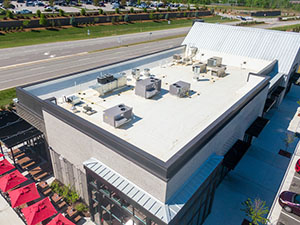
Many problems on this list are simpler to address when caught early. A lifted seam or a small puncture is often a limited repair. The same defect left through an Indiana freeze-thaw winter can allow water into the insulation and deck and may grow into a larger section replacement. A periodic commercial roof inspection in Anderson that documents defect locations and moisture findings gives the owner a record for planning. When an inspection shows widespread damage, commercial roof replacement in Anderson explains how a replacement is approached.
Choosing Single-Ply Roofers in Anderson, IN
Ask any roofer to confirm the existing membrane and condition, the proposed scope and materials, how seams and flashings will be handled, how hidden damage will be addressed and what written warranty applies. CVC Roofing provides commercial single-ply roofing services in Anderson, IN, including TPO, PVC and EPDM systems. To discuss your roof, call CVC Roofing at 317-557-0888.
Frequently Asked Questions
What is the most common single-ply roof problem?
Open seams are among the defects roofers assess because water can enter the roof assembly, though the extent of moisture must be confirmed.
How often should a commercial single-ply roof be inspected?
Spring and fall checks are common planning points, with additional inspections after significant storms. The appropriate schedule depends on roof conditions and warranty requirements.
Is ponding water bad for a single-ply roof?
It can be. Standing water that lingers for days stresses the membrane and may affect warranty terms, so the written warranty should be checked.
Can a single-ply roof be repaired or does it need replacement?
Limited problems such as seams and punctures can often be repaired, while widespread damage or wet insulation may call for replacement of a larger area.