 Quality Services,
The single feature that determines whether a TPO roofing system protects a building for decades or fails early is something most owners never see: the welded seams. For commercial buildings in Anderson, IN, the quality of those welds is the difference between a watertight roof and a recurring leak problem. At CVC Roofing, we install TPO systems across Indiana, and seam welding is where our attention goes first. Call us at 317-557-0888 to learn what a proper installation looks like.
For related commercial roofing guidance in Anderson, see single-ply roofing in Anderson and flat roof sealing in Anderson.
How Seam Welding Defines TPO Roofing Performance
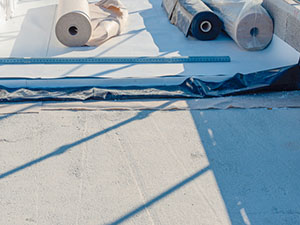
TPO, short for thermoplastic polyolefin, is a single-ply membrane installed in large sheets across a commercial roof. Wherever two of those sheets meet, the edges are joined using heat rather than glue or tape. Hot air melts the surfaces of both sheets and they are pressed together, fusing into one continuous piece of material. When that weld is done correctly, the bond is actually stronger than the membrane itself. That single detail is the foundation of how a TPO roof keeps water out for its entire service life.
This is also why two TPO roofs that use the exact same membrane can perform completely differently. The material coming off the roll is identical from one job to the next. What changes is the quality of the thousands of feet of welded seam that tie those sheets together. A building owner comparing TPO bids is really comparing the crews making those welds, even if the proposal only talks about the membrane brand and thickness.
Why a Strong Weld Outperforms Glued Seams
The reason heat-welded seams matter so much become clear when you compare them to older joining methods. Adhesives and seam tapes rely on a separate material to hold two sheets together, and that material ages on its own schedule. Over time it dries out, loses grip, and lets the seam open up. A heat weld has no separate adhesive to fail. The two membrane sheets become a single material at the seam, so there is no glue line to break down. In an Indiana climate where roofs face heavy snow, freeze-thaw cycles, and summer heat, that difference in seam durability is what carries a TPO roof through decades without seam leaks.
What Can Go Wrong with TPO Roofing Welding
A heat weld is only as good as the installer who makes it, and this is where TPO performance is won or lost. The weld requires the right temperature, the right speed, and the right pressure, all controlled by the technician running the equipment. A few things can compromise it:
- A weld run too cool that does not fully fuse the sheets, leaving a weak bond that opens later
- A weld run too hot that scorches and thins the membrane, creating a brittle seam
- Dirt or moisture trapped in the seam during welding that prevents a clean bond
- Skipped probe testing that would have caught a void or gap before the project was called complete
None of these problems are visible from the ground, and most are not obvious even from the roof surface right after installation. They reveal themselves months or years later as leaks that seem to come from nowhere. That delay is exactly why the crew’s discipline during installation matters so much. The owner is trusting that every foot of seam was welded right and tested, because there is no easy way to verify it after the fact without a professional inspection.
Get TPO Roofing with Welds That Last
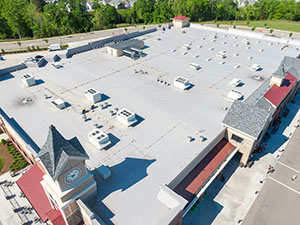
A TPO roof lives or dies by the quality of its seams, and that quality comes down to the skill and care of the crew making the welds. For commercial building owners in Anderson, IN, choosing an installer who treats seam welding is a priority as it protects the entire investment. At CVC Roofing, we weld and test every seam to the standard a long-lasting roof demands across Indiana. Call us at 317-557-0888 to schedule a consultation and roof evaluation.
FAQ
How are TPO roofing seams joined?
TPO seams are heat-welded with hot air that melts and fuses adjacent sheets into a single continuous, watertight bond.
Are welded TPO seams stronger than the membrane?
Yes, a properly made heat weld is stronger than the TPO membrane itself, which is why seam quality is so important.
How do you test a TPO seam weld?
Installers use a probing tool to check the full length of each weld for voids or weak spots, re-welding any that fails.
What causes TPO seams to fail?
Most seam failures trace back to welds run too hot or too cold, dirt in the seam, or skipped quality testing during install.