 Quality Services,
Choosing among commercial roofing companies in Greenwood, IN is easier when every contractor is asked the same questions and the answers are written down. CVC Roofing & Sheet Metal serves Greenwood commercial property owners and brings 45+ years of combined industry experience to the work. To discuss a project, call 317-557-0888.
This article explains how to compare contractors side by side: what each should state about services, investigation, materials, exclusions, scheduling, occupied-building protection, references, and warranty responsibility, and which follow-up questions show that two bids are not actually comparable. For a deeper look at the bid document itself, see how to compare commercial roofing bids in Greenwood.
Project Management by Quality Commercial Roofing Companies
A roofing company is judged by how it plans and runs the job as much as by its price. Good project management means the owner knows what will be done, in what order, who is responsible, and how changes will be handled. The sections below cover the parts of a project where contractors tend to differ.
How Do Commercial Roofing Companies Approach a Project?
The first step is understanding the building. A roof assessment should identify visible damage, membrane condition, drainage patterns, and indications that further moisture testing may be necessary before a recommendation is made. The recommendation should then be tied to what was found, with a written scope that lists the work, the materials, and the schedule. If a recommendation is based on limited inspection, have the contractor identify those limits and describe how any unknown conditions will be evaluated before construction.
Planning Small vs. Large-Scale Roofing Projects
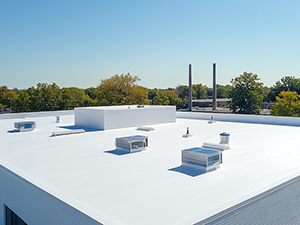
Project size changes what to ask. On a small building or a partial repair, the main questions are access, how long the roof will be open, and whether work can be done around business hours. On a larger facility, the questions shift to staging, crane or hoisting needs, phasing across sections of the roof, and how the crew will protect rooftop equipment, occupants, and neighboring areas.
Either way, ask each contractor to describe how the project will be sequenced and who the owner should contact on site. If a bidder cannot explain who supervises the work, handles interruptions, or approves changes, ask for those responsibilities to be assigned in writing.
Recommending the Right Roofing System
A good contractor explains why a system fits the building rather than defaulting to one product. CVC works with single-ply roofing systems, including TPO, PVC, and EPDM. A few general points help when reading proposals:
- TPO: a heat-welded white or light-colored membrane commonly used on low-slope commercial roofs.
- PVC: also heat-welded, and often considered where grease or chemical exposure is a concern. See PVC single-ply roofing in Greenwood.
- EPDM: a rubber membrane with seams that are typically adhered or taped rather than welded.
If a bid includes another system, such as metal or modified bitumen, ask the contractor to confirm in writing that it installs that system and who will perform the work. The right choice depends on the roof’s slope, deck, equipment, and exposure, so the proposal should state the reasons.
Side-by-Side Review: Are These Bids Comparable?
Use the table below with each contractor’s proposal. If two bids cannot be filled in the same way, the prices should not be compared yet.
| Item | What Each Contractor Should State | Follow-Up Question | Sign the Bids Are Not Comparable |
|---|---|---|---|
| Confirmed services | The work the company performs itself on this type of roof. | Which parts, if any, are subcontracted? | One bid covers tear-off and flashing, another only the membrane. |
| Investigation scope | What was inspected: roof, deck, insulation, drainage, and moisture. | How were hidden conditions checked, and how will unknowns be priced? | One contractor walked the roof and another quoted from photos. |
| Material and system | Manufacturer, product line, thickness, attachment method, and insulation. | Why was this system chosen for this roof? | A bid says only ‘single-ply’ or ‘new roof.’ |
| Exclusions | Items not included, such as deck repair, code upgrades, or equipment work. | What would cause a change order, and at what unit price? | One bid lists exclusions and another lists none. |
| Scheduling | Start window, duration, weather contingencies, and phasing. | What happens if weather delays the work? | Different assumptions about working hours or phasing. |
| Occupied-property protection | Interior protection, access control, noise, debris, and safety measures. | How will tenants and customers be protected? | No mention of protecting occupants or equipment. |
| References | Similar commercial projects and contacts the owner can call. | Can I speak with an owner of a similar building? | References are offered only for unrelated work. |
| Warranty responsibility | Which warranty is from the manufacturer and which is from the contractor, and what each covers. | Who handles a leak in year two, and how is it reported? | Terms are summarized but no warranty document is provided. |
How to Compare the Companies, Not Just the Price
A detailed scope does not answer every question about the company carrying it out. Confirm the business name that will appear on the contract, the person responsible for field supervision, the person authorized to approve change orders, and how unresolved issues will be handled after completion. Ask whether the crew performing specialized membrane or flashing work is employed or subcontracted, and who will remain responsible for the result. References, when available, are most useful when they relate to a similar occupied commercial property and roof assembly.
Professional Project Management Makes a Difference
Communication is easier to judge before the contract than after it. Ask how progress will be reported, who approves changes, and what documentation the owner receives at the end. Ask about site safety practices and what the contractor expects from the owner, such as roof access and equipment shutdowns. A contractor should explain which documents the owner will receive, including any applicable warranty documents, agreed final inspection report, and information about material changes. Verbal assurances alone are a weak substitute for those written responsibilities.
Quality That Extends Roof Lifespan
A roof’s service life depends on installation quality, materials, building conditions, drainage, and maintenance, so a general lifespan should not be presented as a project-specific guarantee. For the selected roof system, agree on closeout checks for applicable seams, attachment, flashings, and drains; request a record of any unresolved items and written maintenance guidance. Confirm these deliverables in the contract rather than assuming they are automatic. For an example of repair-specific questions to document separately from replacement work, see flat roof repair in Greenwood.
Beyond Other Commercial Roofing Companies
Price matters, but the lowest number is not always the lowest cost. A bid that leaves out deck repair, flashing, or warranty documents can grow through change orders, while a higher bid may simply include more. The goal is to compare equal scopes, then weigh price, schedule, communication, and warranty.
CVC Roofing & Sheet Metal provides commercial roofing services in Greenwood, with TPO, PVC and EPDM among its single-ply options. To arrange that conversation, call 317-557-0888. A written proposal should distinguish confirmed conditions from assumptions, identify the roof areas covered, and state who handles issues found after the work begins.
Frequently Asked Questions
What should I look for in commercial roofing companies?
Confirm the license and insurance coverage, ask for references on similar buildings, and compare written scopes, exclusions, and warranty documents.
Do commercial roofing companies handle both small and large projects?
Many do, but the planning differs. Ask how the contractor sequences work, protects occupants, and manages access on a project of your size.
How long does a commercial roof installation take?
It depends on roof size, system, weather, and complexity, so ask for a written schedule with assumptions and a plan for delays.
How can I tell if two roofing bids are comparable?
Check that both state the same services, inspection scope, materials, exclusions, schedule, and warranty responsibility. If they do not, ask follow-up questions before comparing prices.