 Quality Services,
Reflective roof coating can be a practical way to restore a commercial roof in Anderson, IN when the existing assembly is still suitable. Coating is not a substitute for correcting trapped moisture, deteriorated decking, failed drainage, or other underlying conditions. The decision should be based on roof condition, adhesion, drainage, repair needs, and system compatibility.
CVC Roofing provides commercial roof coating and restoration services for properties in Anderson, IN. Call 317-557-0888 to discuss an assessment and whether restoration, repair, or replacement better fits the roof’s documented condition.
Is Your Commercial Roof a Good Candidate for Coating?
A roof coating renews and protects the surface of an existing roof, but it cannot correct every problem beneath that surface. Before a restoration scope is approved, the roof should be evaluated for moisture concerns, substrate condition, adhesion, drainage, existing repairs, and material compatibility.
Moisture and Substrate Condition
Suspected moisture below the roof surface should be investigated before coating. The appropriate method can vary by roof assembly and project, so wet insulation or concealed damage should be confirmed rather than assumed from staining or one visible leak. Coating over saturated insulation does not remove the moisture, and coating cannot repair rotten or structurally deteriorated decking.
If wet insulation, damaged decking, or widespread membrane failure is confirmed, the recommendation may change. Some roofs may allow selective repairs before restoration, while others may be better candidates for replacement.
Adhesion and Surface Preparation
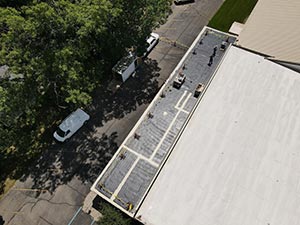
A coating is only useful when it can bond properly to a prepared surface. Preparation may include cleaning, removal of loose or incompatible material, repairs at seams or penetrations, and other steps required for the existing roof and proposed system. Depending on the substrate and coating specification, a primer, adhesion test, or test area may also be appropriate.
Existing blisters, open seams, punctures, loose flashing, or failed patches should be addressed within the restoration scope rather than simply covered. The proposal should explain what will be repaired before coating and what conditions would prevent the project from moving forward as planned.
Drainage Conditions Still Matter
Roof coating does not correct a drainage defect that allows water to remain on the roof. Ponding can be related to blocked drainage, low areas, structural deflection, slope, or other roof-design conditions. Those causes should be identified before restoration so the owner understands whether drainage work is part of the project, requires separate corrective work, or limits coating suitability.
A coating can protect a suitable roof surface, but it does not create proper slope or repair failed drainage by itself.
System Compatibility
Not every coating system is appropriate for every existing roof material. Compatibility depends on the existing membrane or surface, previous coatings or repairs, substrate condition, preparation requirements, and the specific restoration system being proposed. Working with an experienced commercial roofing contractor can help define whether the proposed coating is appropriate for the existing assembly.
What a Roof Coating Project Should Address
Once a roof is confirmed as a reasonable restoration candidate, the written scope should describe surface preparation, required repairs, coating application, detail work, and project acceptance. It should also identify any areas excluded from the scope and explain how concealed conditions or additional repairs will be handled if they are discovered during the work.
Application requirements vary by coating system and roof condition. Weather, surface dryness, preparation, application thickness, cure conditions, and detailing can all affect the finished work, so the contractor should follow the applicable project specification rather than relying on a one-size-fits-all process.
Application Acceptance and Follow-Up
Project closeout should document completed work and areas that require continued monitoring. Useful records may include photos, repaired locations, system information, approved scope changes, and applicable warranty documents.
A follow-up inspection can establish the roof’s post-project condition and identify maintenance needs. It is not a guarantee that every future leak or roof problem has been eliminated. Rooftop traffic, later mechanical work, drainage changes, weather, and aging can still affect performance.
Coating, Repair, or Replacement?
Restoration may make sense when the roof remains serviceable, defects can be repaired, the substrate can support coating, moisture conditions are understood, and drainage is not an unresolved limitation. Repair may fit localized problems, while replacement may be better when deterioration, moisture, or substrate damage is too extensive for a sound restoration scope.
Cost, reflectivity, and potential cooling benefits can be part of the decision, but they should not override roof condition. Actual energy effects depend on factors such as roof assembly, insulation, building use, climate, HVAC operation, coating properties, and maintenance. A coating should not be presented as guaranteeing a specific utility savings percentage, payback period, or service life.
Schedule a Roof Coating Assessment in Anderson, IN
Commercial roof coating can extend the service of a suitable existing roof, but the recommendation should begin with the roof’s documented condition. CVC Roofing serves commercial properties in Anderson, IN with roof coating and restoration services. Call 317-557-0888 to schedule a roof assessment and discuss whether restoration, repair, or replacement fits the building.
Frequently Asked Questions
Can any commercial roof be coated instead of replaced?
No. Coating is best considered when the existing roof and substrate can support restoration after necessary repairs. Saturated insulation, rotten decking, extensive deterioration, or unresolved drainage problems can make coating inappropriate.
What if the roof already has ponding water or a leak?
Coating does not correct drainage defects or the underlying cause of a leak by itself. Those conditions should be investigated and addressed before the restoration scope is approved.
How is roof coating candidacy determined?
The evaluation should consider moisture concerns, substrate condition, adhesion, existing defects, drainage, repair needs, and compatibility between the existing roof and proposed coating system.
What should happen after the coating is applied?
Project closeout should document the completed work, repairs, and any areas requiring future monitoring. Follow-up inspections and maintenance can then be based on the roof’s condition, use, and applicable warranty requirements.