 Quality Services,
Commercial facilities in Indianapolis face high winds, heavy rainfall, seasonal snow, and repeated freeze-thaw cycles that can gradually wear down roofing systems. Over time, those conditions may contribute to moisture intrusion, insulation deterioration, drainage problems, or defects that are not obvious from the ground. A professional roof inspection is most useful when it produces a report the owner can use to decide what happens next.
Reach out to CVC Roofing & Sheet Metal for professional roof inspection services in Indianapolis, IN. Call (317) 557-0888 to discuss your commercial roof.
What an Inspection Report Should Give You
A useful inspection is more than a walk across the roof. The report should document the conditions found and make the next decision easier to scope. A practical report typically includes:
- Dated photographs showing the condition of each documented defect area
- Specific defect locations referenced to a roof plan, section, or other clear location marker
- Moisture findings, including what was tested, what the test could and could not establish, and where access or roof construction limited the investigation
- Recommended actions organized by priority, such as immediate repair, near-term work, or continued monitoring
- Reinspection triggers, such as a severe storm, a recurring leak, a drainage issue, or a previously noted condition that changes
Thermal or infrared scanning can help identify areas that deserve a closer look, but a thermal anomaly is not automatically proof of wet insulation or damaged decking. Solar loading, surface conditions, roof construction, and other factors can affect readings. When a finding will materially change the repair or replacement scope, the contractor should explain what additional verification is appropriate before treating it as confirmed moisture damage.
The finished report should go to the property owner, facility manager, or other person responsible for approving roof work. That report can then support a maintenance plan, a repair estimate, or a replacement discussion. When the report identifies exact locations, priorities, and known limitations, contractors can price a more defined scope instead of relying on a general impression of the roof.
Inspection Findings Should Lead to a Clear Next Step
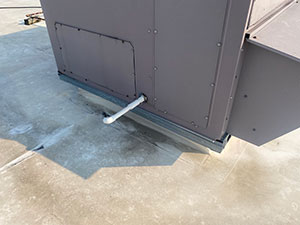
Indianapolis roofs experience seasonal temperature swings along with rain, snow, and wind. An inspection should pay close attention to areas where movement, drainage, and repeated service activity can create problems, including parapet flashing, HVAC curbs, expansion joints, seams, penetrations, drains, and scuppers.
The report should separate conditions that need immediate attention from items that can be monitored. A small flashing defect may call for a targeted repair, while repeated moisture findings, widespread membrane deterioration, or compromised insulation may justify a broader assessment. The point is to connect each finding to a defined next step rather than presenting a long list of observations without priorities.
When the next step is repair, the inspection report should give enough detail to help define the affected area and what still needs to be confirmed. When replacement is being considered, the report can help identify recurring problems, moisture concerns, drainage limitations, and other conditions that should be carried into the replacement scope.
Warranty and Insurance Documentation
A documented inspection history can also provide useful records for warranty and insurance purposes. If the applicable roofing warranty requires periodic inspections or maintenance, the owner should follow the written terms for that specific system rather than assuming one inspection schedule applies to every roof.
Inspection reports can also establish a dated record of roof conditions before and after a weather event. That documentation may help an insurance adjuster understand what changed, but it does not determine coverage or guarantee a claim outcome. Coverage decisions remain with the carrier under the terms of the policy.
Clear documentation can also support a more predictable maintenance budget. Instead of waiting for an emergency, an owner can use the report to plan work around documented priorities and monitor developing conditions between scheduled visits.
Professional Roof Inspection Services
A thorough commercial roof inspection in Indianapolis should evaluate membrane condition, seams, penetrations, flashing, drainage, rooftop equipment transitions, and other visible components of the roof assembly. When moisture investigation is part of the inspection, the report should distinguish screening findings from conditions that have been confirmed through additional testing.
CVC Roofing & Sheet Metal can provide commercial roof inspection services in Indianapolis and document the conditions that should inform the next maintenance, repair, or replacement decision. The company’s existing commercial roofing services content also provides broader context on commercial roof work.
Call (317) 557-0888 to discuss an inspection for your Indianapolis commercial property.
Frequently Asked Questions
What should a commercial roof inspection report include?
It should include dated photos, clear defect locations, moisture-test findings and limitations, prioritized recommended actions, and conditions that should trigger reinspection.
Do thermal findings always prove that insulation is wet?
No. Infrared or thermal anomalies can identify areas that need closer investigation, but important findings may need additional verification before they are used to define repair or replacement scope.
Can an inspection report help with an insurance claim?
It can provide a dated record of roof conditions before or after an event, but the insurance carrier determines coverage and claim outcomes under the policy.
How often should a commercial roof be inspected?
Follow the inspection and maintenance requirements in the applicable warranty and roof-management plan, and consider an additional inspection after severe weather or when leaks or drainage problems appear.