 Quality Services,
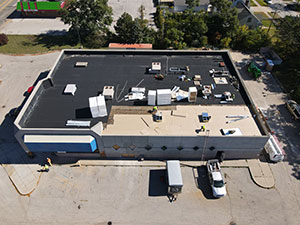
For commercial property owners in Kokomo, IN, choosing among single-ply roofers and single-ply systems is easier when the decision starts with the building and not with the membrane’s headline benefits. TPO, PVC, and EPDM are all used on flat and low-slope commercial roofs, but each behaves differently at seams, flashings, and repairs, and each depends on the condition of what lies beneath it. CVC Roofing & Sheet Metal works with single-ply systems on commercial buildings in Kokomo and can be reached at (317) 557-0888.
This article focuses on how an owner can assess a single-ply system for a specific building, what the contractor should confirm, and which installation mistakes to watch for. For a membrane-specific look, see the pages on TPO roofing and EPDM roofing in Kokomo.
Single-Ply Suitability Matrix
The table lists the building conditions that most often decide whether a single-ply system fits and how it should be installed. It describes general practice and does not replace a roof evaluation.
| Factor | What to Assess | Why It Matters |
|---|---|---|
| Substrate condition | Deck soundness, dryness, and whether an existing roof can stay. | Existing moisture or deck damage must be investigated and addressed before installation. |
| Drainage | Slope to drains, ponding history, drain and scupper capacity. | Standing water warrants a drainage review, including the membrane manufacturer’s limits and detailing. |
| Attachment | Fully adhered, mechanically attached, or ballasted, based on deck and wind exposure. | Each method has distinct substrate, structural-loading, wind-design and detailing requirements; ballast is not suitable for every roof. |
| Insulation | Type, thickness, moisture content, and compatibility with the membrane. | Insulation affects attachment, energy performance, and moisture risk. |
| Rooftop activity | Equipment traffic, exhaust, grease, or chemical exposure. | Traffic and contaminants can favor one membrane or call for protection. |
| Detailing | Number of curbs, penetrations, drains, and wall transitions. | Transitions are potential leak paths and need specific flashing details. |
| Service access | Safe roof access and clear paths to equipment. | Easy access makes inspection and repair more likely to happen. |
Seams, Repairs, and Compatibility
Seams are where single-ply systems differ most. TPO and PVC seams are generally heat-welded, which fuses the sheets when done correctly. EPDM seams are commonly joined with adhesive or seam tape. That affects repairs: a repair must use materials and methods that are compatible with the membrane already on the roof. Materials approved for one membrane may not be compatible with another, and weathered membrane often needs cleaning or special preparation before it will accept a repair. Before work begins, the owner should ask which membrane is on the roof or proposed, how seams will be made and checked, and which compatible methods are planned for future repairs. If the existing roof type cannot be confirmed from records, the scope should identify how that uncertainty will be resolved.
Common Installation Mistakes Single-Ply Roofers See
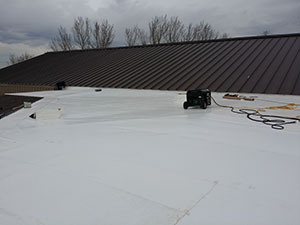
Even experienced crews face challenges, and these are the mistakes that most often compromise a single-ply roof:
- Inadequate deck preparation: a substrate that is not appropriately prepared, sound, and dry can cause poor adhesion, wrinkles, or bubbling, and trapped moisture can lead to premature wear.
- Poor seaming: incorrect welding temperature, rushed alignment, or insufficient pressure can leave weak spots where water enters.
- Incorrect fastener placement: fasteners that are too close can damage the membrane, and those too far apart reduce wind resistance, especially at edges, curbs, and penetrations.
- Neglected flashing and penetrations: vents, HVAC units, and drains need carefully sealed details.
- Overlooked slope and drainage: flat roofs still need to shed water, and tapered insulation or drain adjustments may be needed to avoid ponding.
How to Avoid Installation Pitfalls
Avoiding these mistakes starts with a clear scope and quality checks during the work. Prepare the deck by addressing moisture and repairing damaged sections, as described in the guide to deck preparation for EPDM roof installation, whose principles apply to other single-ply systems as well. Follow the manufacturer’s instructions for seam welding or adhesive application, fastener spacing, flashing, and penetration sealing. Check slope and drains before the membrane goes down, and inspect the work during and after installation so errors are caught early.
Choosing the Right Single-Ply Roofers Matters
Skilled installation matters as much as the membrane choice. When comparing contractors for a Kokomo building, ask:
- Which single-ply systems do they install, and which do they recommend for this roof and why?
- How will the existing roof and deck be evaluated for moisture and damage?
- How are seams checked, and what documentation will be provided at the end?
- What manufacturer requirements apply, and what do any warranty documents actually say?
- How will future repairs and inspections be handled?
Written answers help compare bids on the same basis and reduce surprises. Savings, energy benefits, and service life depend on the building, the installation, and maintenance, so they should be treated as project-specific, not guaranteed. After installation, Commercial roof maintenance can help find seam, flashing and drainage concerns before they spread.
Reliable Single-Ply Roofers
A single-ply roof performs best when the system fits the building, the details are planned, and installation is checked. From deck preparation to seam welding, fastener placement, and flashing, attention to detail decides how well the roof performs over time. Owners of commercial buildings in Kokomo can reach CVC Roofing & Sheet Metal at (317) 557-0888 to discuss single-ply roofing for a specific building. The roof’s age, current system if known, and any leak locations are useful details to have ready. If an existing single-ply roof has damage, EPDM roof repair information explains how repairs are approached for that membrane.
FAQ
Can all single-ply membranes be repaired if installed incorrectly?
Minor seam or flashing problems can often be repaired, but extensive installation errors may require partial or full replacement.
How long does a professionally installed single-ply roof last?
Service life depends on the membrane, the installation, the building, and maintenance. Ask for the manufacturer’s documentation for the specific product.
Are single-ply roofs energy-efficient?
Many membranes are reflective, which can reduce heat absorption, but actual savings depend on the building, insulation, and use.
What should I check before hiring single-ply roofers?
Ask about experience with your membrane type, how the roof will be evaluated, how seams and flashings are checked, and what documentation and warranty terms apply.