 Quality Services,
TPO single-ply roofing in Lafayette, IN can be a good fit for some commercial buildings, but the choice should follow the roof assembly and operating conditions rather than headline benefits alone. Deck condition, insulation, drainage, attachment, rooftop traffic, penetrations, and service access all affect whether a TPO system makes sense for a particular building.
CVC Roofing & Sheet Metal provides commercial single-ply roofing services, including TPO, and serves Lafayette within its Indiana service area. Before a system is selected, the contractor should confirm the existing roof condition and explain how the proposed assembly will handle the building’s substrate, drainage, attachment needs, insulation, rooftop use, and detailing.
Is TPO the Right Fit for Your Building?
TPO, or thermoplastic polyolefin, is a single-ply membrane system whose seams are typically heat-welded. Its reflective surface can reduce solar heat absorbed at the roof surface, but the complete building assembly determines actual energy performance. The system should be evaluated as part of the roof assembly rather than as a membrane-only decision.
| Suitability factor | What the contractor should confirm |
|---|---|
| Substrate condition | Whether the deck, cover board, insulation, and retained roofing materials are sound enough for the proposed assembly and whether moisture or deterioration needs separate correction. |
| Drainage | How water reaches drains, scuppers, or other outlets, whether ponding or blocked drainage is present, and whether drainage changes need their own design or repair scope. |
| Attachment | Which attachment method is proposed, whether it is compatible with the deck and insulation, and what project-specific wind or assembly requirements govern that choice. |
| Insulation | The insulation type, thickness, condition, attachment, and role within the complete roof assembly rather than assuming the membrane alone determines energy performance. |
| Rooftop activity | Where technicians, equipment, and regular service routes may place wear on the membrane and whether protective walkway or detail requirements should be included. |
| Detailing and access | How curbs, walls, drains, penetrations, edges, and access points will be flashed and how later service work can be performed without unnecessary membrane damage. |
TPO does not correct wet insulation, deteriorated decking, chronic drainage defects, or another unsuitable underlying condition simply because a new membrane is installed over the area. Those conditions need to be identified and incorporated into the actual project scope.
Seams and Future Repair Compatibility
TPO seams are heat-welded, so seam quality depends on proper surface preparation, equipment settings, installation conditions, and workmanship. Future repair work also has to account for the age and condition of the membrane, contamination, previous repairs, and the compatibility of the repair materials and method.
A contractor should explain how seam quality will be checked during installation and how details at curbs, penetrations, drains, and transitions will be handled. That information is more useful than a blanket statement that every welded seam can always be repaired the same way later.
Advantages of TPO Single-Ply Systems
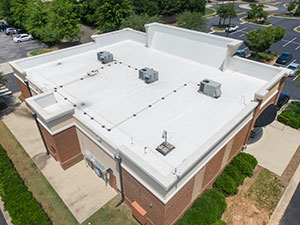
TPO is widely used on commercial low-slope roofs because it combines a single-ply membrane with heat-welded seams and is available in reflective colors. Those characteristics can make it suitable for new or replacement work when the deck, insulation, drainage, attachment, and detailing support the selected assembly.
Reflective Surface and Energy Performance
A reflective TPO surface can reduce solar heat absorbed at the roof compared with a darker surface. The effect on building energy use depends on insulation, HVAC operation, air leakage, occupancy, roof area, climate, and the rest of the building envelope. It should not be translated into one guaranteed savings figure.
Service Life Depends on the Complete Assembly
There is no single service-life number that applies to every TPO roof. Membrane thickness, attachment, seam quality, drainage, rooftop traffic, climate exposure, installation quality, maintenance, and later repairs all affect performance. The contractor should explain the expected service conditions for the specific system being proposed rather than relying on a universal lifespan claim.
Maintenance Should Follow Roof Conditions
TPO roofs still need inspection and maintenance. Timing can depend on roof condition, manufacturer or warranty requirements, recent repairs, rooftop activity, significant weather, and drainage performance. Inspections can help identify seam changes, punctures, flashing defects, drainage concerns, or traffic-related wear before they affect a larger area.
TPO Single-Ply Roofing Services in Lafayette
CVC Roofing & Sheet Metal’s single-ply roofing services include TPO as one of the membrane options available for commercial roofs. The membrane choice should be made after the building conditions and complete assembly are reviewed.
For owners who need a condition baseline before selecting or maintaining a membrane system, CVC also provides commercial roof inspection in Lafayette. Inspection and membrane selection are separate decisions, but the inspection findings can provide evidence that informs the system scope.
Contact CVC Roofing & Sheet Metal at (317) 557-0888 to discuss TPO single-ply roofing for a commercial property in Lafayette, IN.
Frequently Asked Questions
Is TPO roofing suitable for every commercial building?
No. Deck and insulation condition, drainage, attachment requirements, rooftop activity, detailing, and service access should be reviewed before TPO is selected.
What should a contractor confirm before recommending TPO?
The contractor should confirm the substrate, moisture conditions, drainage, attachment method, insulation, penetrations, rooftop activity, and the details that control the complete roof assembly.
Does reflective TPO automatically lower energy bills?
No. A reflective surface can reduce solar heat absorption, but actual building energy use also depends on insulation, HVAC operation, air leakage, occupancy, climate, and roof area.
How long does a TPO roof last?
There is no universal service-life number. Performance depends on the selected assembly, membrane, attachment, seam quality, drainage, installation, climate exposure, maintenance, and later repairs.