 Quality Services,
A commercial roof coating can be a practical restoration option when the existing roof is still a suitable candidate. For an Indianapolis facility, the decision should start with moisture, adhesion, substrate condition, drainage, compatibility, and the repairs needed before coating. A coating can protect a sound roof surface, but it does not correct saturated insulation, rotten decking, or a drainage defect by covering over it.
CVC Roofing & Sheet Metal provides commercial roof coating services in Indianapolis, IN. Call (317) 557-0888 to discuss whether restoration, repair, or replacement fits the roof condition.
Is the Roof a Good Candidate for Coating?
A restoration recommendation should explain why the existing roof can support a coating system. The following conditions help separate roofs that may be suitable for restoration from roofs that need other work first.
| Condition | Conditions Supporting Coating | When Repair or Replacement Comes First |
|---|---|---|
| Moisture | The roof assembly is dry enough for the proposed restoration system and any moisture concerns are limited and addressed within the scope. | Wet or saturated insulation, trapped moisture, or other concealed conditions require investigation and corrective work before coating. |
| Adhesion | The existing surface can be prepared so the proposed primer and coating meet the applicable adhesion requirements. | The membrane or existing coating is loose, contaminated, deteriorated, or otherwise unable to provide reliable adhesion without broader corrective work. |
| Substrate condition | The deck and roof components remain serviceable and localized defects can be repaired before restoration. | Rotten decking, sagging, widespread deterioration, or other substrate problems require separate repair or replacement. |
| Drainage | The existing drainage functions adequately for the building, or needed drainage corrections are included in the project scope. | Persistent ponding comes from blocked outlets, slope, settlement, or another drainage defect that the coating itself will not correct. |
| Compatibility | The proposed coating system is compatible with the existing membrane, previous coatings, primers, and preparation requirements. | The existing surface or coating history is incompatible, unknown, or requires further evaluation before restoration can be approved. |
A coating does not fix a drainage problem simply because the selected chemistry can tolerate some standing water. Drainage and ponding should be evaluated separately. If the roof has widespread wet materials, failed substrate, or broad membrane deterioration, a commercial roof replacement assessment may be more appropriate.
Preparation and Repairs Before Coating
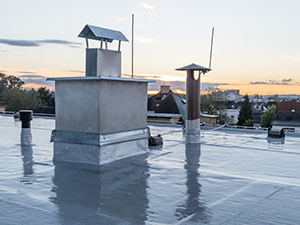
A coating project depends on the preparation completed before application. The roof should be cleaned and prepared for the selected system, and defects that would interfere with restoration should be addressed first. Seams, flashings, penetrations, punctures, fasteners, damaged areas, previous repairs, and drainage conditions can all affect the final scope.
When moisture is suspected, the inspection should distinguish what is confirmed from what remains uncertain. If infrared scanning or another moisture-investigation method is used, the findings should be interpreted in context and confirmed as appropriate before they change the restoration scope.
Application and Acceptance
The coating should be installed according to the written requirements for the selected system, including any primer, reinforcement, coverage, thickness, weather, and cure conditions that apply. The project closeout should confirm that the agreed scope was completed rather than relying only on the appearance of the finished surface.
Depending on the project documents, acceptance can include reviewing repaired details, coverage, missed or thin areas, and any specified thickness checks. CVC’s existing published Indianapolis coating copy also describes site reporting that can include infrared moisture scans and mil-thickness verification. Those records should be tied to the actual project scope rather than assumed for every coating job.
Silicone and Acrylic Coatings
Silicone and acrylic coatings have different characteristics, so one should not be selected only because it is commonly used on commercial roofs. Silicone systems are often considered where moisture exposure and ponding tolerance are concerns, while acrylic systems are commonly used on roofs with positive drainage and where reflectivity is a priority. The actual choice still depends on the existing roof, compatibility, preparation, written product requirements, and project conditions.
Reflectivity, Energy Use, and Cost
Reflective coatings can reduce roof-surface heat gain, but that does not guarantee a specific reduction in building energy use or cooling costs. Whole-building performance also depends on insulation, HVAC systems, air leakage, occupancy, operating schedules, climate, and other conditions.
Restoration can also reduce tear-off compared with full replacement when the existing roof is a suitable candidate. That does not mean coating is always the least expensive option. Preparation, repairs, moisture conditions, drainage work, access, and the selected coating system all affect project cost. Tax treatment also varies, so any tax question should be reviewed with the appropriate financial professional.
Follow-Up Inspection and Maintenance
A coated roof still needs inspection and maintenance after the project is complete. A follow-up roof inspection can document the condition of seams, flashings, penetrations, drainage, repairs, and the coated surface. Ongoing commercial roof maintenance can then track changes over time based on the installed system and roof condition.
Roof Coating in Indianapolis, IN
For a commercial roof in Indianapolis, coating should be recommended because the existing assembly is a sound restoration candidate, not simply because the surface is aging. CVC Roofing & Sheet Metal can evaluate the roof and discuss whether coating, repair, or replacement better fits the conditions found. Call (317) 557-0888 to discuss the next step.
Frequently Asked Questions
What types of commercial roofs can be coated?
Several commercial roof types may be suitable for coating, but candidacy depends on moisture, substrate condition, drainage, compatibility, preparation, and the selected coating system rather than roof type alone.
How long does a roof coating project take?
Timing depends on roof size, preparation, repairs, weather, cure requirements, access, and the coating system. A project-specific schedule should be set after the roof is evaluated.
Is a roof coating as durable as a new membrane?
They are different approaches. A coating can extend the service life of a sound existing roof, while replacement addresses the roof assembly more broadly. The appropriate choice depends on the condition found.
When is roof coating not the right choice?
Coating is generally inappropriate when wet materials, rotten decking, incompatible surfaces, widespread deterioration, or unresolved drainage defects make restoration unreliable until those conditions are corrected.